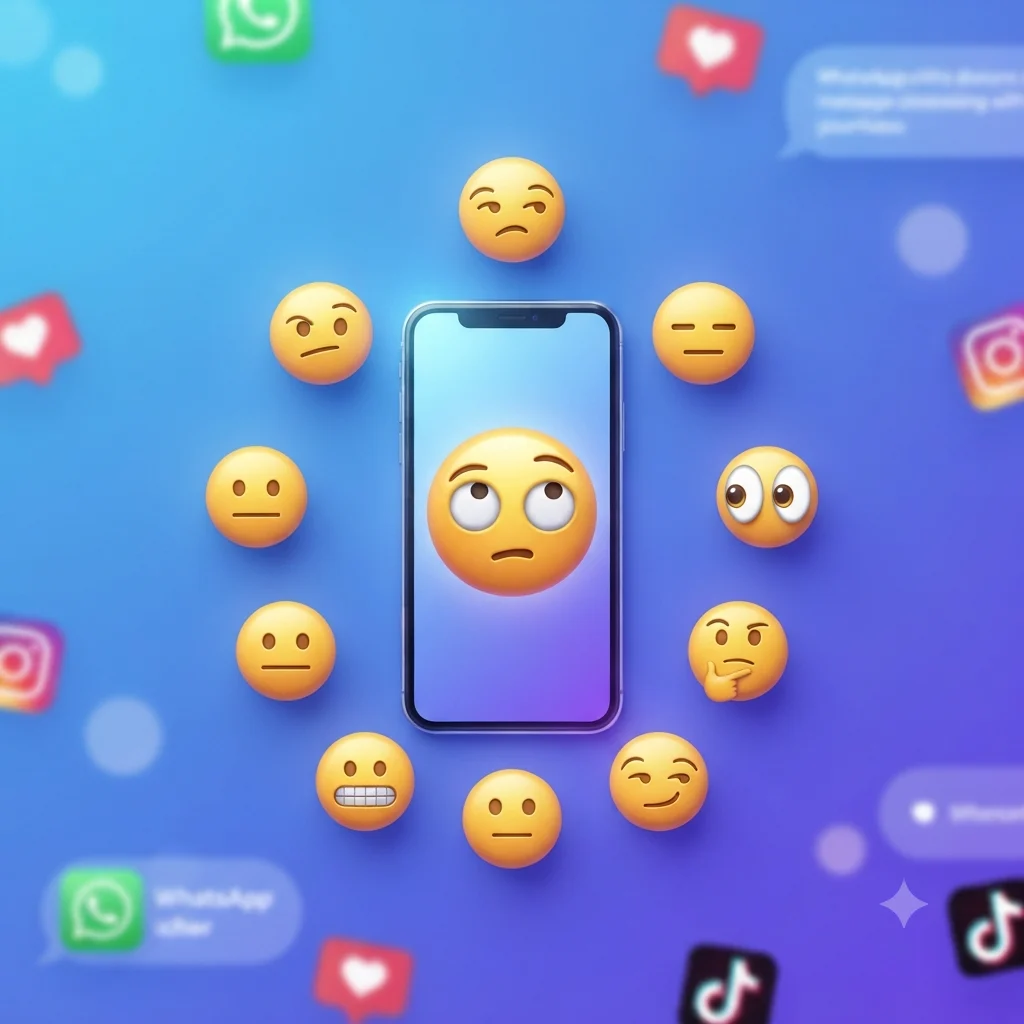
A side eye emoji is a facial expression emoji that shows suspicion, disbelief, annoyance, sarcasm, silent judgment, or awkwardness. People use side eye emojis like 🙄 and 👀 in text messages, social media, and online conversations to react to questionable, embarrassing, funny, or unexpected situations without saying many words.
One small emoji can completely change the meaning of your message—and the side eye emoji is one of the biggest examples. While it may seem like a simple reaction, using the wrong side eye emoji can make you sound sarcastic, rude, annoyed, or judgmental, even when that wasn’t your intention. That’s why millions of people search for its meaning before using it in conversations.
Whether you’re looking for the side eye emoji meaning, wondering what it means from a girl or a guy, searching for the correct emoji to copy and paste, or trying to understand the difference between 🙄, 👀, and other similar emojis, this guide has everything you need. Every emoji tells a slightly different story, and knowing those differences helps you communicate clearly and avoid sending the wrong impression.
Today, side eye emojis are widely used on WhatsApp, Instagram, Facebook, TikTok, X, Snapchat, and other messaging platforms to express emotions that words often can’t. They can show playful teasing, skepticism, frustration, disbelief, or subtle judgment depending on the context and the relationship between the people chatting. Understanding these meanings makes your conversations more natural, expressive, and easier to understand.
In this complete guide, you’ll discover the meaning of every popular side eye emoji, learn when and when not to use each one, explore real-life examples, compare similar emojis, and find the perfect side eye emoji for every situation. By the end, you’ll know exactly what every side eye emoji means, when to use it with confidence, and how to avoid the common mistakes that most people make.
What do side eye emoji mean?
The side eye emoji family often represents skepticism, awkwardness, playful judgment, or silent reactions. The exact feeling depends on the conversation and the surrounding text.
The core emoji family used throughout this guide includes:
🙄 😒 🫤 😑 👀 🤨 😏 😬 😶 😐
| Emoji | Core meaning | Misread as | Best used when |
|---|---|---|---|
| 🙄 | Eye-rolling reaction | Anger | Responding to drama or exaggeration |
| 😒 | Mild annoyance | Sadness | Showing disappointment or boredom |
| 🫤 | Mixed feelings | Confusion | Feeling unsure about something |
| 😑 | Speechless reaction | Tiredness | When words aren’t enough |
| 👀 | Paying attention | Flirting only | Watching gossip or interesting news |
| 🤨 | Questioning something | Anger | Expressing doubt or curiosity |
🙄 Face with Rolling Eyes
Meaning: Expresses playful sarcasm, disbelief, or frustration.
Example 1: Here we go again 🙄
Example 2: You really forgot… again? 🙄
😒 Unamused Face
Meaning: Shows mild annoyance, disappointment, or boredom.
Example 1: That meeting could’ve been an email 😒
Example 2: You’re late again 😒
🫤 Face with Diagonal Mouth
Meaning: Reflects uncertainty or mixed emotions.
Example 1: I’m not sure about this 🫤
Example 2: It might work… maybe 🫤
😑 Expressionless Face
Meaning: Suggests being speechless or emotionally flat.
Example 1: I have no words 😑
Example 2: Well… that happened 😑
👀 Eyes
Meaning: Indicates watching, curiosity, or noticing something interesting.
Example 1: Spill the tea 👀
Example 2: I’m waiting for the update 👀
🤨 Face with Raised Eyebrow
Meaning: Shows doubt or questioning.
Example 1: Really? 🤨
Example 2: Are you serious? 🤨
😏 Smirking Face
Meaning: Suggests playful confidence or teasing.
Example 1: I knew you’d say that 😏
Example 2: Interesting choice 😏
😬 Grimacing Face
Meaning: Expresses awkwardness or nervousness.
Example 1: That was uncomfortable 😬
Example 2: Oops… my mistake 😬
😶 Face Without Mouth
Meaning: Represents staying silent or avoiding a response.
Example 1: I’ll keep quiet 😶
Example 2: No comment 😶
😐 Neutral Face
Meaning: Shows an indifferent or balanced reaction.
Example 1: Okay then 😐
Example 2: That’s one way to see it 😐
How to use side eye emoji the right way
On WhatsApp emojis, the side eye family feels personal and emotional. A simple “Sure 🙄” between close friends often sounds playful instead of rude because the relationship provides context.
For Instagram emojis, these expressions are commonly paired with captions, comments, or Stories to create a humorous or relatable vibe. Many creators use them to react to everyday situations without writing long explanations.
On TikTok, the same emojis are frequently used with jokes, trending sounds, ironic videos, and reaction comments. Short replies like “👀” or “🤨” can become part of the humor.
Dos
- Match the emoji to your relationship with the person.
- Keep the tone playful when joking.
- Use them to support your message, not replace it.
Don’ts
- Don’t send repeated side eye emojis in serious conversations.
- Don’t assume everyone reads the emotion the same way.
- Don’t use sarcastic reactions in professional chats unless appropriate.
Best side eye emoji combos — copy & paste
Romantic
👉 😏👀 — Playful teasing with someone you like.
👉 🙄😏 — Lighthearted couple banter.
👉 😶😏 — Keeping a flirty secret.
Cute
👉 👀😐 — Curious but calm reaction.
👉 😬🫤 — Cute awkward moment.
👉 😑👀 — Watching quietly.
Flirty
👉 😏👀🤨 — Playful challenge.
👉 👀😏😬 — Nervous flirting.
👉 🙄😏👀 — Pretending not to care.
Missing someone
👉 😶🫤 — Quietly thinking about someone.
👉 😑👀 — Waiting for their reply.
👉 🫤😐 — Missing them but staying calm.
Good night
👉 😐😶 — Peaceful sign-off.
👉 😬😶 — Ending an awkward conversation kindly.
👉 👀🙄 — One last funny reaction before bed.
These copy paste emojis work naturally across most messaging apps and social platforms.
Trending side eye emoji
People continue finding creative ways to express emotions without typing long messages. Among the trending emojis 2026, the side eye family is often used for humor, subtle reactions, and relatable storytelling.
| Emoji | Why trending | Who uses it | Platform |
|---|---|---|---|
| 🙄 | Quick sarcastic reactions | Younger users, friends | WhatsApp, TikTok |
| 👀 | Builds curiosity and anticipation | Content creators, everyday users | Instagram, TikTok |
| 🤨 | Expresses doubt in a playful way | Meme pages, casual users | X, Instagram |
| 😏 | Adds teasing personality | Friends and couples | WhatsApp, Instagram |
As digital conversations evolve, emoji combinations often change naturally with online culture and communication styles.
FAQ
1. What is the most popular side eye emoji?
The rolling eyes emoji (🙄) is widely recognized because it instantly shows sarcasm, disbelief, or playful frustration in everyday conversations.
2. What does 🙄 mean from a girl or boy?
Its meaning usually depends on the conversation rather than gender. It can show teasing, joking, annoyance, or friendly sarcasm between people who know each other.
3. Why do emojis look different on iPhone vs Android?
Each company designs its own emoji artwork. Although the meaning stays similar, the facial expressions and details can appear slightly different across devices.
4. Are side eye emoji used differently in other countries?
Yes. While many reactions are universal, humor, sarcasm, and cultural habits can influence how people interpret and use these emojis in conversations.
Conclusion
The side eye emoji family makes digital conversations more expressive, whether you’re joking, reacting, or quietly sharing your thoughts. Using the right emoji at the right moment helps your message feel more natural and relatable. With a little context and good timing, even a simple glance can speak volumes.

Sophia Langley is a digital language writer specializing in emoji meanings, internet slang, symbols, and online communication, creating accurate, engaging, and reader-friendly content.
