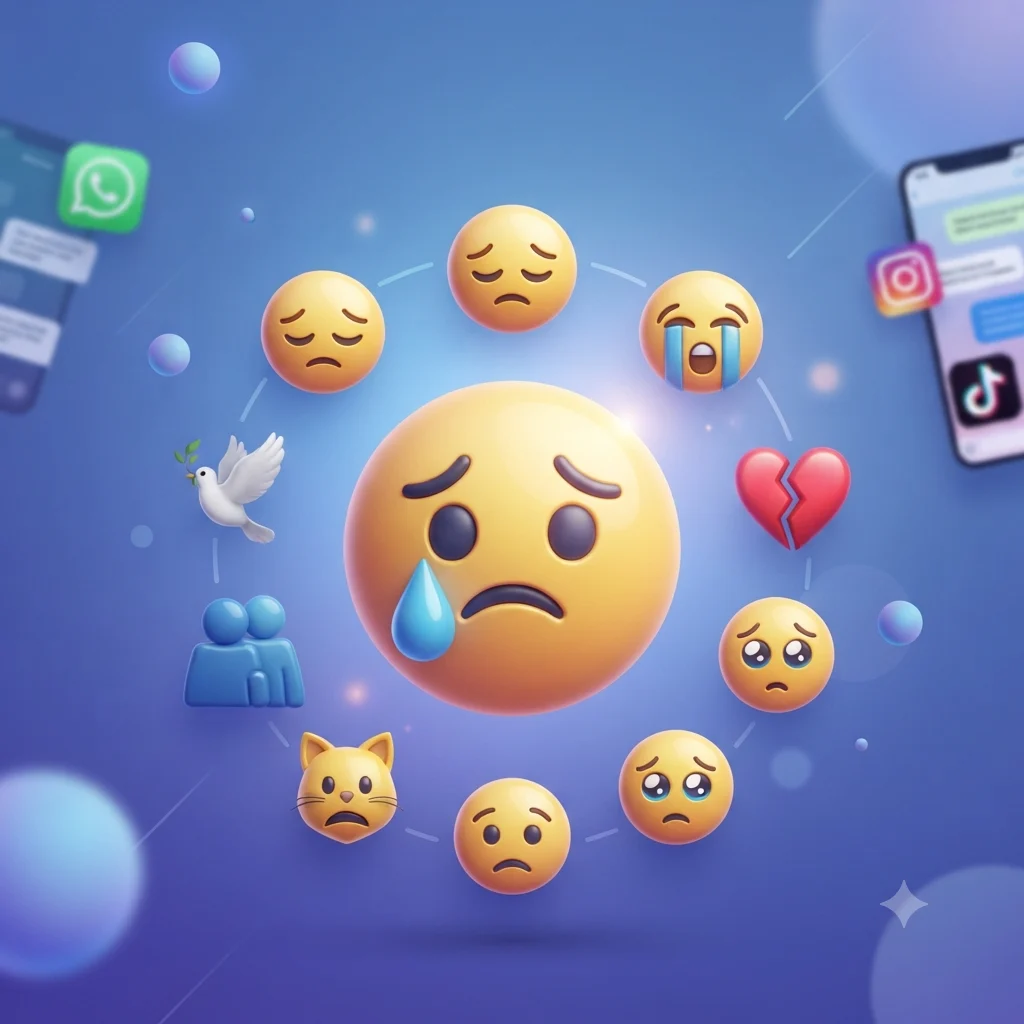
A sad emoji is a digital symbol used to express sadness, disappointment, heartbreak, loneliness, sympathy, or emotional pain in online conversations. Popular sad emojis like 😢, 😭, ☹️, and 😞 help people share emotions, react to difficult moments, and communicate feelings when words aren’t enough.
Have you ever received a sad emoji and wondered what the sender really meant? Or maybe you’ve hesitated before choosing one because so many sad emojis look similar but express different emotions. The truth is, using the wrong sad emoji can completely change the tone of your message. What seems like a simple emoji may express disappointment, grief, regret, sympathy, or deep heartbreak—and most people don’t know the difference.
Whether you’re searching for the meaning of a sad emoji, the difference between 😢 and 😭, a sad face emoji to copy and paste, or the best emoji to express heartbreak, loneliness, or emotional support, this guide has everything you need in one place. Instead of searching multiple websites, you’ll find clear explanations, real-life examples, and practical tips that make every emoji easy to understand.
Sad emojis are among the most frequently used emojis on WhatsApp, Instagram, Facebook, TikTok, Snapchat, X, and other messaging apps because they help express emotions that words often fail to capture. Choosing the right emoji not only makes your message more genuine but also helps others understand exactly how you feel, avoiding confusion or misunderstandings.
By the end of this guide, you’ll discover the meanings of the most popular sad emojis, learn when to use each one, understand the differences between similar crying and sad face emojis, explore copy-and-paste options, and see real-life examples for every situation. One small emoji can reveal emotions words cannot—and after reading this guide, you’ll know exactly which sad emoji to use with confidence every time.
What do sad emoji mean?
The sad emoji family represents different levels of sadness, disappointment, sympathy, heartbreak, and emotional reflection. The same emoji can feel supportive in one conversation and deeply personal in another, depending on the relationship and message.
| Emoji | Core meaning | Misread as | Best used when |
|---|---|---|---|
| 😢 | Feeling sad | Crying dramatically | Sharing genuine sadness |
| 😞 | Disappointed | Angry | Something didn’t go as planned |
| 😔 | Thoughtful sadness | Bored | Quiet reflection or regret |
| 😭 | Intense emotion | Laughing too hard | Emotional moments or overwhelming feelings |
| 💔 | Heartbreak | Relationship only | Emotional pain, loss, or disappointment |
| 🥺 | Seeking comfort | Being childish | Asking gently for support |
😢 Crying Face
Meaning: Feeling sad, emotional, or heartbroken.
Example 1: I really miss those days 😢
Example 2: Today has been difficult 😢
😞 Disappointed Face
Meaning: Expressing disappointment or frustration.
Example 1: The trip got canceled 😞
Example 2: That didn’t work out 😞
😔 Pensive Face
Meaning: Quiet reflection, regret, or emotional thinking.
Example 1: I’ve been thinking about everything 😔
Example 2: Maybe things could have been different 😔
😭 Loudly Crying Face
Meaning: Strong emotions or overwhelming sadness.
Example 1: I can’t stop crying 😭
Example 2: That ending broke my heart 😭
💔 Broken Heart
Meaning: Emotional pain, heartbreak, or loss.
Example 1: I never expected this 💔
Example 2: It still hurts 💔
🥺 Pleading Face
Meaning: Asking for kindness, comfort, or understanding.
Example 1: Please don’t be upset 🥺
Example 2: Can we talk? 🥺
😥 Sad but Relieved Face
Meaning: Feeling upset while also relieved.
Example 1: At least everyone is safe 😥
Example 2: I’m glad it’s over 😥
😿 Crying Cat Face
Meaning: Cute expression of sadness.
Example 1: My favorite show ended 😿
Example 2: Don’t leave yet 😿
🫂 People Hugging
Meaning: Offering comfort and emotional support.
Example 1: I’m here for you 🫂
Example 2: Sending you a big hug 🫂
🕊️ Dove
Meaning: Peace, healing, and hope after sadness.
Example 1: Wishing you peace 🕊️
Example 2: Better days are ahead 🕊️
How to use sad emoji the right way
On WhatsApp emojis, sad expressions often feel personal because conversations happen with close friends and family. A simple “I’m here for you 🫂” or “I understand 😢” can make a message more caring.
On Instagram emojis, people usually combine these symbols with reflective captions, memories, or meaningful stories. Keeping the tone genuine works better than adding too many emojis.
On TikTok, sadness is often mixed with humor, relatable trends, or emotional storytelling. A caption like “That moment 😭💔” can connect with viewers without needing many words.
Do:
- Use them to match your real emotions.
- Keep combinations simple.
- Consider the tone of the conversation.
Don’t:
- Overuse multiple crying emojis in every message.
- Send heartbreak symbols casually if the situation isn’t serious.
- Assume everyone interprets emotional emojis the same way.
Best sad emoji combos — copy & paste
Romantic
- 💔😢 — When love hurts.
- 🥺🫂 — Asking for comfort from someone special.
- 😔💔🕊️ — Healing after a breakup.
Cute
- 😿🥺 — Looking adorably sad.
- 😢🫂 — Thanking someone for support.
- 😥🕊️ — Staying hopeful after a difficult day.
Flirty
- 🥺😢 — Playfully asking for attention.
- 😔🥺 — Missing someone’s messages.
- 🫂🥺 — Wanting a comforting hug.
Missing someone
- 😢💔 — Missing someone deeply.
- 😔🫂 — Thinking about someone you care about.
- 😭🥺 — Expressing overwhelming emotions.
Good night
- 😔🕊️ — Wishing someone peaceful rest.
- 🫂🕊️ — Sending comfort before bedtime.
- 😥😢 — Ending the day after a difficult moment.
Trending sad emoji
People continue to use emotional emojis in more authentic conversations rather than only dramatic moments. Many content creators also use them in storytelling posts that feel personal and relatable.
| Emoji | Why trending | Who uses it | Platform |
|---|---|---|---|
| 😢 | Honest emotional conversations | Friends, families, creators | WhatsApp, Instagram |
| 🥺 | Gentle, supportive messages | Younger users, creators | TikTok, Instagram |
| 💔 | Emotional storytelling | Social media users | Instagram, TikTok |
| 🫂 | Showing empathy and support | Communities and friends | WhatsApp, Instagram |
As digital conversations evolve, people often find new creative ways to combine familiar emotional emojis while keeping their original feelings recognizable.
FAQ
What is the most popular sad emoji?
😢 is one of the most recognized emotional emojis because it expresses sadness clearly without feeling too dramatic. It fits both personal chats and social media posts.
What does 😢 mean from a girl or boy?
Usually it simply shows sadness, empathy, or missing someone. The exact meaning depends more on the conversation than on whether the sender is a girl or a boy.
Why do emojis look different on iPhone vs Android?
Each operating system has its own emoji artwork. The emotion stays similar, but the facial expressions, colors, and design style can appear slightly different.
Are sad emoji used differently in other countries?
Yes. Cultural habits and messaging styles vary, so the same emoji may feel more serious, supportive, or casual depending on local communication preferences.
Conclusion
The sad emoji family helps express feelings that are often difficult to put into words. Whether you’re comforting a friend, sharing a heartfelt moment, or posting on social media, using these emojis thoughtfully makes your messages feel more genuine. A single well-chosen symbol can sometimes create a stronger emotional connection than a long explanation.

Sophia Langley is a digital language writer specializing in emoji meanings, internet slang, symbols, and online communication, creating accurate, engaging, and reader-friendly content.
