Japanese last names are family names often shaped by nature, places, geography, and local history.
Their meanings can differ because the same surname may be written with different kanji characters.
Many Japanese surnames have meanings connected to mountains, rivers, forests, fields, villages, and other landscapes.
A Japanese surname can be much more than a name—it can offer a small glimpse into the place, imagery, or tradition behind it. That is what makes exploring Japanese last names and meanings so interesting, especially when you want a surname with a specific feeling or story.
In this guide, you’ll find popular, traditional, unique, rare, beautiful, strong, and nature-inspired Japanese last names, with their meanings explained clearly. Whether you need a surname for a character, story, username, creative project, baby, or simply to learn more about Japanese names, you can explore options based on the meaning and style that fit your needs.
From familiar Japanese family names to distinctive choices with fascinating meanings, this list makes it simple to discover a surname that has more behind it than just its sound.
The Most Common Japanese Last Names
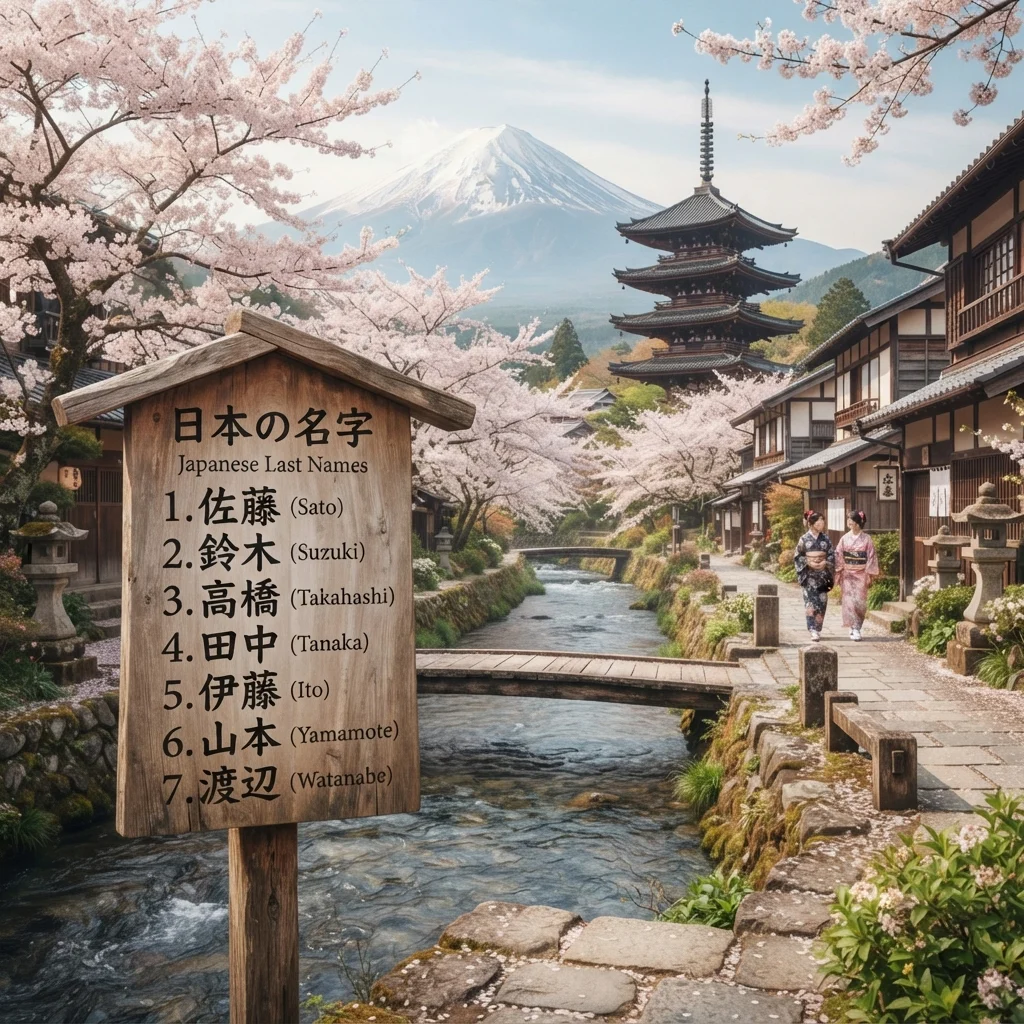
These are the most popular Japanese last names. Millions of people in Japan share these names.
Sato
- Meaning: (SAH-toh) Means “help” or “wisteria.” The most common Japanese last name.
- Best for: A family with a long, noble history and many descendants.
Suzuki
- Meaning: (Soo-ZOO-kee) Means “bell tree.” A very common, nature-inspired name.
- Best for: A family connected to bells, trees, or a bell-maker ancestor.
Takahashi
- Meaning: (Tah-kah-HAH-shee) Means “high bridge.” A common, geography-based name.
- Best for: A family who lived near a tall or important bridge.
Tanaka
- Meaning: (Tah-NAH-kah) Means “middle of the rice field.”
- Best for: A family who lived in the center of a rice paddy.
Watanabe
- Meaning: (Wah-tah-NAH-beh) Means “cross over” or “ferry.”
- Best for: A family who lived near a river crossing or ferry.
Ito
- Meaning: (EE-toh) Means “wisteria.” A beautiful, flower-inspired name.
- Best for: A family connected to wisteria flowers or a place with wisteria.
Yamamoto
- Meaning: (Yah-mah-MOH-toh) Means “base of the mountain.”
- Best for: A family who lived at the foot of a mountain.
Nakamura
- Meaning: (Nah-kah-MOO-rah) Means “middle village.”
- Best for: A family who lived in the center of a village.
Kobayashi
- Meaning: (Koh-bah-YAH-shee) Means “small forest.”
- Best for: A family who lived near a small woods or forest.
Kato
- Meaning: (KAH-toh) Means “increase” or “addition.”
- Best for: A family with a growing, prosperous lineage.
Yoshida
- Meaning: (Yoh-SHEE-dah) Means “lucky rice field.”
- Best for: A lucky, prosperous family with rice field roots.
Yamada
- Meaning: (Yah-MAH-dah) Means “mountain rice field.”
- Best for: A family who farmed rice fields in the mountains.
Sasaki
- Meaning: (Sah-SAH-kee) Means “help” or “assist.”
- Best for: A helpful, supportive family with a long history.
Yamaguchi
- Meaning: (Yah-mah-GOO-chee) Means “mountain mouth” or “mountain entrance.”
- Best for: A family who lived at the entrance to a mountain.
Matsumoto
- Meaning: (Maht-soo-MOH-toh) Means “pine tree base.”
- Best for: A family who lived near the base of a pine tree.
Nature-Inspired Japanese Last Names
These names come from nature, including trees, mountains, rivers, and fields.
Yamamoto
- Meaning: (Yah-mah-MOH-toh) Means “base of the mountain.”
- Best for: A family who lived at the foot of a mountain.
Kobayashi
- Meaning: (Koh-bah-YAH-shee) Means “small forest.”
- Best for: A family who lived near a small woods.
Matsumoto
- Meaning: (Maht-soo-MOH-toh) Means “pine tree base.”
- Best for: A family who lived near pine trees.
Takahashi
- Meaning: (Tah-kah-HAH-shee) Means “high bridge.”
- Best for: A family who lived near a tall bridge.
Tanaka
- Meaning: (Tah-NAH-kah) Means “middle of the rice field.”
- Best for: A family who farmed rice in the center of a field.
Yamada
- Meaning: (Yah-MAH-dah) Means “mountain rice field.”
- Best for: A family who farmed rice in the mountains.
Ishikawa
- Meaning: (Ee-shee-KAH-wah) Means “stone river.”
- Best for: A family who lived near a rocky river.
Shimizu
- Meaning: (Shee-MEE-zoo) Means “clear water.”
- Best for: A family who lived near a pure, clear spring.
Mori
- Meaning: (MOH-ree) Means “forest.”
- Best for: A family who lived in or near a forest.
Hayashi
- Meaning: (Hah-YAH-shee) Means “woods” or “forest.”
- Best for: A family who lived near a wooded area.
Inoue
- Meaning: (Ee-NOH-ay) Means “above the well.”
- Best for: A family who lived near a well.
Kimura
- Meaning: (Kee-MOO-rah) Means “tree village.”
- Best for: A family who lived in a village near trees.
Saito
- Meaning: (SYE-toh) Means “pure” or “wisteria.”
- Best for: A pure, noble family with wisteria connections.
Fujita
- Meaning: (Foo-JEE-tah) Means “wisteria rice field.”
- Best for: A family who grew rice near wisteria flowers.
Okada
- Meaning: (Oh-KAH-dah) Means “hill rice field.”
- Best for: A family who farmed rice on a hill.
Geographic Japanese Last Names
These names describe where a family lived. They are very common in Japan.
Tanaka
- Meaning: (Tah-NAH-kah) Means “middle of the rice field.”
- Best for: A family who lived in the center of a rice paddy.
Nakamura
- Meaning: (Nah-kah-MOO-rah) Means “middle village.”
- Best for: A family who lived in the center of a village.
Yamamoto
- Meaning: (Yah-mah-MOH-toh) Means “base of the mountain.”
- Best for: A family who lived at the foot of a mountain.
Yamaguchi
- Meaning: (Yah-mah-GOO-chee) Means “mountain entrance.”
- Best for: A family who lived at the entrance to a mountain.
Kawasaki
- Meaning: (Kah-wah-SAH-kee) Means “river cape” or “river point.”
- Best for: A family who lived near a river bend.
Shimizu
- Meaning: (Shee-MEE-zoo) Means “clear water.”
- Best for: A family who lived near a clear spring.
Hasegawa
- Meaning: (Hah-seh-GAH-wah) Means “long valley river.”
- Best for: A family who lived in a long river valley.
Nakajima
- Meaning: (Nah-kah-JEE-mah) Means “middle island.”
- Best for: A family who lived on an island in the middle of a river.
Nishimura
- Meaning: (Nee-shee-MOO-rah) Means “west village.”
- Best for: A family who lived in the western part of a village.
Hayashi
- Meaning: (Hah-YAH-shee) Means “woods” or “forest.”
- Best for: A family who lived near a forest.
Matsumura
- Meaning: (Maht-soo-MOO-rah) Means “pine tree village.”
- Best for: A family who lived in a village near pine trees.
Okamoto
- Meaning: (Oh-kah-MOH-toh) Means “base of the hill.”
- Best for: A family who lived at the bottom of a hill.
Shimada
- Meaning: (Shee-MAH-dah) Means “island rice field.”
- Best for: A family who farmed rice on an island.
Fujiwara
- Meaning: (Foo-jee-WAH-rah) Means “wisteria field.”
- Best for: A noble family with wisteria and field connections.
Miura
- Meaning: (Mee-OO-rah) Means “three bays.”
- Best for: A family who lived near three bays or inlets.
Ancient and Noble Japanese Last Names
These names come from ancient clans and noble families. They have a long, proud history.
Fujiwara
- Meaning: (Foo-jee-WAH-rah) Means “wisteria field.” A powerful noble clan.
- Best for: A noble family with a long history of power and influence.
Minamoto
- Meaning: (Mee-nah-MOH-toh) Means “source” or “origin.” A famous samurai clan.
- Best for: A samurai family with a proud warrior heritage.
Taira
- Meaning: (TYE-rah) Means “peace” or “flat.” A famous samurai clan.
- Best for: A samurai family who valued peace and honor.
Tachibana
- Meaning: (Tah-CHEE-bah-nah) Means “wild orange tree.” A noble clan.
- Best for: A noble family with a beautiful, citrus-inspired name.
Abe
- Meaning: (AH-beh) Means “peace” or “calm.” An ancient, noble name.
- Best for: A peaceful, calm family with a long history.
Kato
- Meaning: (KAH-toh) Means “increase.” A noble family with a growing legacy.
- Best for: A prosperous, growing family with noble roots.
Sasaki
- Meaning: (Sah-SAH-kee) Means “help.” A noble family with a helpful spirit.
- Best for: A helpful, supportive family with a long history.
Watanabe
- Meaning: (Wah-tah-NAH-beh) Means “cross over.” A noble family.
- Best for: A family who helped others cross rivers or bridges.
Ito
- Meaning: (EE-toh) Means “wisteria.” A noble, flower-inspired name.
- Best for: A noble family connected to wisteria flowers.
Uesugi
- Meaning: (Oo-eh-SOO-ghee) Means “above the cedar.” A samurai clan.
- Best for: A samurai family who lived near cedar trees.
Oda
- Meaning: (OH-dah) Means “small rice field.” A famous samurai clan.
- Best for: A samurai family with a famous warlord ancestor.
Takeda
- Meaning: (Tah-KEH-dah) Means “bamboo rice field.” A samurai clan.
- Best for: A samurai family connected to bamboo and farming.
Hojo
- Meaning: (HOH-joh) Means “north” or “direction.” A powerful regent clan.
- Best for: A powerful family with a history of leadership.
Ashikaga
- Meaning: (Ah-shee-KAH-gah) Means “foot” or “leg.” A famous shogun clan.
- Best for: A shogun family with a proud military history.
Tokugawa
- Meaning: (Toh-koo-GAH-wah) Means “virtuous river.” The shogun clan.
- Best for: A powerful shogun family who ruled Japan for centuries.
Japanese Last Names Starting with S
These common Japanese last names start with the letter S. They are very recognizable.
Sato
- Meaning: (SAH-toh) Means “help” or “wisteria.” The most common name.
- Best for: A family with a long, noble history.
Suzuki
- Meaning: (Soo-ZOO-kee) Means “bell tree.”
- Best for: A family connected to bells or trees.
Sasaki
- Meaning: (Sah-SAH-kee) Means “help” or “assist.”
- Best for: A helpful, supportive family.
Saito
- Meaning: (SYE-toh) Means “pure” or “wisteria.”
- Best for: A pure, noble family.
Shimizu
- Meaning: (Shee-MEE-zoo) Means “clear water.”
- Best for: A family who lived near a clear spring.
Sakamoto
- Meaning: (Sah-kah-MOH-toh) Means “base of the slope.”
- Best for: A family who lived at the bottom of a hill.
Shibata
- Meaning: (Shee-BAH-tah) Means “brushwood rice field.”
- Best for: A family who farmed near brushwood.
Sugiyama
- Meaning: (Soo-ghee-YAH-mah) Means “cedar mountain.”
- Best for: A family who lived on a cedar-covered mountain.
Shimada
- Meaning: (Shee-MAH-dah) Means “island rice field.”
- Best for: A family who farmed rice on an island.
Sakurai
- Meaning: (Sah-koo-RYE) Means “cherry blossom well.”
- Best for: A family connected to cherry blossoms and wells.
Sano
- Meaning: (SAH-noh) Means “help” or “assist.”
- Best for: A helpful, supportive family.
Sekiguchi
- Meaning: (Seh-kee-GOO-chee) Means “gate entrance.”
- Best for: A family who lived near a gate or entrance.
Shimura
- Meaning: (Shee-MOO-rah) Means “island village.”
- Best for: A family who lived in a village on an island.
Sugimoto
- Meaning: (Soo-ghee-MOH-toh) Means “cedar base.”
- Best for: A family who lived at the base of a cedar tree.
Saito
- Meaning: (SYE-toh) Means “pure.” A noble, pure name.
- Best for: A pure, noble family with a long history.
Japanese Last Names Starting with T
These common Japanese last names start with the letter T. They are very recognizable.
Takahashi
- Meaning: (Tah-kah-HAH-shee) Means “high bridge.”
- Best for: A family who lived near a tall bridge.
Tanaka
- Meaning: (Tah-NAH-kah) Means “middle of the rice field.”
- Best for: A family who farmed rice in the center of a field.
Takagi
- Meaning: (Tah-KAH-ghee) Means “tall tree.”
- Best for: A family who lived near a tall tree.
Takeuchi
- Meaning: (Tah-keh-OO-chee) Means “bamboo inside.”
- Best for: A family who lived near a bamboo grove.
Tamura
- Meaning: (Tah-MOO-rah) Means “rice field village.”
- Best for: A family who lived in a village near rice fields.
Terada
- Meaning: (Teh-RAH-dah) Means “temple rice field.”
- Best for: A family who farmed near a temple.
Takeda
- Meaning: (Tah-KEH-dah) Means “bamboo rice field.”
- Best for: A samurai family connected to bamboo and farming.
Tanabe
- Meaning: (Tah-NAH-beh) Means “rice field edge.”
- Best for: A family who lived at the edge of a rice field.
Tsuji
- Meaning: (TSOO-jee) Means “crossroads” or “intersection.”
- Best for: A family who lived at a crossroads.
Tsukamoto
- Meaning: (Tsoo-kah-MOH-toh) Means “base of the mound.”
- Best for: A family who lived at the base of a hill.
Toyoda
- Meaning: (Toh-YOH-dah) Means “abundant rice field.”
- Best for: A wealthy, abundant family with rice field roots.
Toda
- Meaning: (TOH-dah) Means “rice field.”
- Best for: A family who farmed rice for generations.
Tomita
- Meaning: (Toh-MEE-tah) Means “wealthy rice field.”
- Best for: A wealthy, prosperous family.
Tsuda
- Meaning: (TSOO-dah) Means “rice field” or “district.”
- Best for: A family who farmed rice in a district.
Togashi
- Meaning: (Toh-GAH-shee) Means “bridge.”
- Best for: A family who lived near a bridge.
Japanese Last Names Starting with K
These common Japanese last names start with the letter K. They are very recognizable.
Kobayashi
- Meaning: (Koh-bah-YAH-shee) Means “small forest.”
- Best for: A family who lived near a small woods.
Kato
- Meaning: (KAH-toh) Means “increase” or “addition.”
- Best for: A prosperous, growing family.
Kimura
- Meaning: (Kee-MOO-rah) Means “tree village.”
- Best for: A family who lived in a village near trees.
Kawasaki
- Meaning: (Kah-wah-SAH-kee) Means “river cape.”
- Best for: A family who lived near a river bend.
Kondo
- Meaning: (KON-doh) Means “near the shrine.”
- Best for: A family who lived close to a shrine.
Koyama
- Meaning: (Koh-YAH-mah) Means “small mountain.”
- Best for: A family who lived near a small hill or mountain.
Kuroda
- Meaning: (Koo-ROH-dah) Means “black rice field.”
- Best for: A family who farmed dark, rich soil.
Kikuchi
- Meaning: (Kee-KOO-chee) Means “chrysanthemum pond.”
- Best for: A family connected to chrysanthemums and water.
Kaneko
- Meaning: (Kah-NEH-koh) Means “golden child.”
- Best for: A precious, golden family.
Kawaguchi
- Meaning: (Kah-wah-GOO-chee) Means “river entrance.”
- Best for: A family who lived at the mouth of a river.
Kitamura
- Meaning: (Kee-tah-MOO-rah) Means “north village.”
- Best for: A family who lived in the northern part of a village.
Kojima
- Meaning: (Koh-JEE-mah) Means “small island.”
- Best for: A family who lived on a small island.
Kubota
- Meaning: (Koo-BOH-tah) Means “long rice field.”
- Best for: A family who farmed a long, narrow rice field.
Kudo
- Meaning: (KOO-doh) Means “temple” or “shrine.”
- Best for: A family connected to a temple or shrine.
Kurosawa
- Meaning: (Koo-roh-SAH-wah) Means “black marsh.”
- Best for: A family who lived near a dark marsh or swamp.
Japanese Last Names Starting with M
These common Japanese last names start with the letter M. They are very recognizable.
Matsumoto
- Meaning: (Maht-soo-MOH-toh) Means “pine tree base.”
- Best for: A family who lived near pine trees.
Mori
- Meaning: (MOH-ree) Means “forest.”
- Best for: A family who lived in or near a forest.
Murakami
- Meaning: (Moo-rah-KAH-mee) Means “above the village.”
- Best for: A family who lived above a village.
Maeda
- Meaning: (Mah-EH-dah) Means “front rice field.”
- Best for: A family who farmed the front rice field.
Miyazaki
- Meaning: (Mee-yah-ZAH-kee) Means “shrine cape.”
- Best for: A family who lived near a shrine on a cape.
Mizuno
- Meaning: (Mee-ZOO-noh) Means “water field.”
- Best for: A family connected to water and rice fields.
Masuda
- Meaning: (Mah-SOO-dah) Means “increased rice field.”
- Best for: A prosperous, growing family.
Matsuda
- Meaning: (Maht-SOO-dah) Means “pine tree rice field.”
- Best for: A family who farmed near pine trees.
Miyamoto
- Meaning: (Mee-yah-MOH-toh) Means “base of the shrine.”
- Best for: A family who lived at the base of a shrine.
Mochizuki
- Meaning: (Moh-chee-ZOO-kee) Means “full moon.”
- Best for: A family connected to the full moon.
Morita
- Meaning: (Moh-REE-tah) Means “forest rice field.”
- Best for: A family who farmed near a forest.
Murayama
- Meaning: (Moo-rah-YAH-mah) Means “village mountain.”
- Best for: A family who lived in a mountain village.
Muto
- Meaning: (MOO-toh) Means “warrior” or “samurai.”
- Best for: A samurai family with a warrior heritage.
Mitsui
- Meaning: (Meet-SOO-ee) Means “three wells.”
- Best for: A family connected to three wells.
Miyake
- Meaning: (Mee-yah-KEH) Means “three houses.”
- Best for: A family with three households or a triple heritage.
Japanese Last Names Starting with N
These common Japanese last names start with the letter N. They are very recognizable.
Nakamura
- Meaning: (Nah-kah-MOO-rah) Means “middle village.”
- Best for: A family who lived in the center of a village.
Nakajima
- Meaning: (Nah-kah-JEE-mah) Means “middle island.”
- Best for: A family who lived on an island in a river.
Nishimura
- Meaning: (Nee-shee-MOO-rah) Means “west village.”
- Best for: A family who lived in the western part of a village.
Nakano
- Meaning: (Nah-KAH-noh) Means “middle field.”
- Best for: A family who lived in the middle of a field.
Nishida
- Meaning: (Nee-SHEE-dah) Means “west rice field.”
- Best for: A family who farmed rice in the west.
Nagata
- Meaning: (Nah-GAH-tah) Means “long rice field.”
- Best for: A family who farmed a long rice field.
Noguchi
- Meaning: (Noh-GOO-chee) Means “field entrance.”
- Best for: A family who lived at the entrance to a field.
Narita
- Meaning: (Nah-REE-tah) Means “completed rice field.”
- Best for: A family who finished farming a rice field.
Noda
- Meaning: (NOH-dah) Means “rice field.”
- Best for: A family who farmed rice for generations.
Nakagawa
- Meaning: (Nah-kah-GAH-wah) Means “middle river.”
- Best for: A family who lived on the middle part of a river.
Nishikawa
- Meaning: (Nee-shee-KAH-wah) Means “west river.”
- Best for: A family who lived on the west side of a river.
Nakanishi
- Meaning: (Nah-kah-NEE-shee) Means “middle west.”
- Best for: A family who lived in the middle-west area.
Nagai
- Meaning: (Nah-GUY) Means “long well.”
- Best for: A family connected to a long well.
Niwa
- Meaning: (NEE-wah) Means “garden.”
- Best for: A family who loved gardens and nature.
Nishi
- Meaning: (NEE-shee) Means “west.”
- Best for: A family who lived in the west.
Japanese Last Names Starting with Y
These common Japanese last names start with the letter Y. They are very recognizable.
Yamamoto
- Meaning: (Yah-mah-MOH-toh) Means “base of the mountain.”
- Best for: A family who lived at the foot of a mountain.
Yamada
- Meaning: (Yah-MAH-dah) Means “mountain rice field.”
- Best for: A family who farmed rice in the mountains.
Yamaguchi
- Meaning: (Yah-mah-GOO-chee) Means “mountain entrance.”
- Best for: A family who lived at the entrance to a mountain.
Yoshida
- Meaning: (Yoh-SHEE-dah) Means “lucky rice field.”
- Best for: A lucky, prosperous family.
Yamazaki
- Meaning: (Yah-mah-ZAH-kee) Means “mountain cape.”
- Best for: A family who lived on a mountain cape.
Yamanaka
- Meaning: (Yah-mah-NAH-kah) Means “middle of the mountain.”
- Best for: A family who lived in the middle of a mountain.
Yasuda
- Meaning: (Yah-SOO-dah) Means “peaceful rice field.”
- Best for: A peaceful, calm family.
Yokoyama
- Meaning: (Yoh-koh-YAH-mah) Means “side of the mountain.”
- Best for: A family who lived on the side of a mountain.
Yoshikawa
- Meaning: (Yoh-shee-KAH-wah) Means “lucky river.”
- Best for: A lucky family who lived near a river.
Yagi
- Meaning: (YAH-ghee) Means “goat” or “eight trees.”
- Best for: A family connected to goats or eight trees.
Yano
- Meaning: (YAH-noh) Means “arrow field.”
- Best for: A family connected to arrows or a field.
Yoshioka
- Meaning: (Yoh-shee-OH-kah) Means “lucky hill.”
- Best for: A lucky family who lived on a hill.
Yuki
- Meaning: (YOO-kee) Means “snow.”
- Best for: A family connected to snow or winter.
Yamashita
- Meaning: (Yah-mah-SHEE-tah) Means “under the mountain.”
- Best for: A family who lived below a mountain.
Yoneda
- Meaning: (Yoh-NEH-dah) Means “rice field.”
- Best for: A family who farmed rice for generations.
Conclusion
Japanese last names are beautiful and full of meaning. Japanese last names and meanings are connected to nature, geography, and ancient traditions. From common names like Sato and Suzuki to noble names like Fujiwara and Minamoto, each name tells a story.
The most common Japanese surnames come from rice fields, mountains, rivers, and forests. They describe where a family lived or what they did. Whether your family has Japanese roots or you just love the language and culture, these names are wonderful to learn about.
Think about your own last name. What does it mean? Where did it come from? The best popular Japanese family names connect us to a rich history and a beautiful culture. Every name is a piece of history, waiting to be discovered and shared.
(FAQS)
Q1: What is the most common Japanese last name?
A: Sato is the most common Japanese last name. It means “help” or “wisteria” and is shared by millions of people.
Q2: What do Japanese last names mean?
A: Japanese last names often describe where a family lived (like Yamamoto, meaning “base of the mountain”) or what they did (like Tanaka, meaning “middle of the rice field”).
Q3: Why do Japanese last names come from nature?
A: When common people in Japan were required to take last names in the 1800s, many chose names based on their surroundings, like mountains, rivers, trees, and rice fields.
Q4: What are noble Japanese last names?
A: Fujiwara, Minamoto, Taira, and Tokugawa are noble Japanese last names. They come from ancient clans and powerful families.
Q5: What are short Japanese last names?
A: Mori (forest), Abe (peace), Ito (wisteria), and Nishi (west) are all short, simple Japanese last names.

Sophia Langley is a digital language writer specializing in emoji meanings, internet slang, symbols, and online communication, creating accurate, engaging, and reader-friendly content.