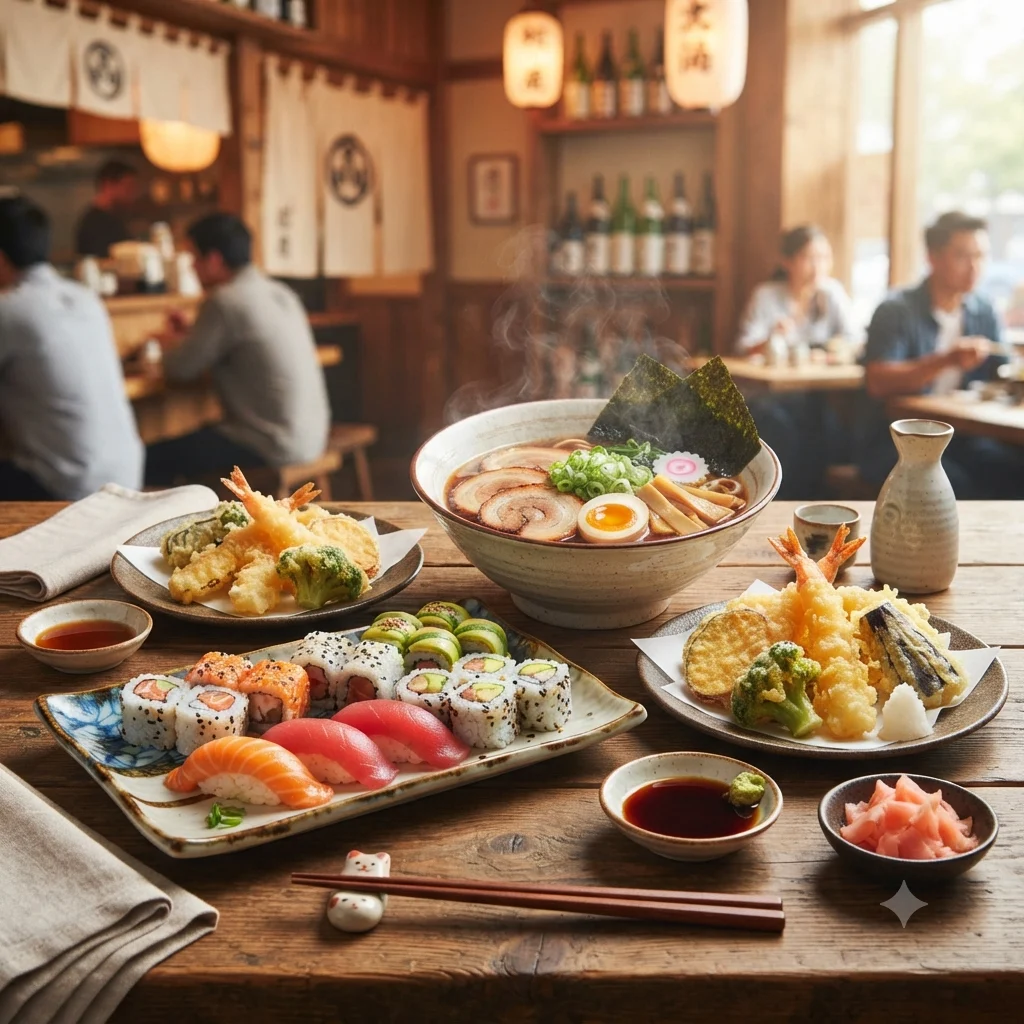
Japanese food names are the names of traditional and modern dishes from Japan. They include famous foods like sushi, ramen, tempura, sashimi, udon, soba, mochi, and many other authentic Japanese dishes. Learning these names makes it easier to understand Japanese cuisine, read restaurant menus, discover new flavors, and explore Japan’s rich culinary traditions.
Japanese food is more than just something to eat—it is a journey through centuries of tradition, craftsmanship, fresh ingredients, and unforgettable flavors. Every dish has a unique name that reflects its history, preparation, ingredients, or regional roots. From the delicate elegance of sushi and sashimi to the comforting warmth of ramen and udon, each Japanese dish tells a story that makes every meal a memorable experience.
Instead of knowing only a handful of popular dishes, learning Japanese food names opens the door to the incredible variety of traditional Japanese foods, authentic Japanese dishes, street food favorites, regional specialties, soups, noodles, seafood, rice dishes, desserts, and seasonal delicacies. It also helps you order with confidence at Japanese restaurants, understand menus more easily, cook authentic recipes, and appreciate the culture behind every bite.
Whether you are a food lover, traveler, student, home cook, blogger, chef, or simply curious about Japanese cuisine, knowing these names will expand your culinary vocabulary and help you recognize both iconic classics and hidden gems.
In this collection, you’ll discover the best Japanese food names, including traditional favorites, modern dishes, famous menu items, delicious street foods, sweet desserts, comforting noodle dishes, fresh seafood, and regional specialties. Whether you’re planning a trip to Japan, exploring Japanese restaurants, or searching for new foods to try, you’ll find plenty of delicious inspiration.
Get ready to explore authentic Japanese food names and discover the flavors, traditions, and stories that have made Japanese cuisine one of the world’s most admired and beloved culinary cultures.
Sushi and Sashimi Names
Sushi is the most famous Japanese food in the world. These names describe different types of sushi and raw fish dishes.
Sushi
- Meaning: (SOO-shee) Means “sour rice.” Vinegar-flavored rice topped with fish or vegetables.
- Best for: A fresh, light meal that is perfect for lunch or dinner.
Sashimi
- Meaning: (Sah-SHEE-mee) Means “pierced body.” Thin slices of raw fish served without rice.
- Best for: A pure, simple dish for people who love fresh fish.
Maki
- Meaning: (MAH-kee) Means “rolled.” Sushi rolled in seaweed with rice and fillings inside.
- Best for: A fun, portable sushi that is easy to eat with your hands.
Nigiri
- Meaning: (Nee-GHEE-ree) Means “two fingers.” A hand-pressed ball of rice topped with fish.
- Best for: A classic, elegant sushi that shows off the fish.
Temaki
- Meaning: (Teh-MAH-kee) Means “hand roll.” A cone-shaped sushi roll wrapped in seaweed.
- Best for: A casual, fun sushi that is easy to make at home.
Uramaki
- Meaning: (Oo-rah-MAH-kee) Means “inside-out roll.” Sushi with rice on the outside and seaweed inside.
- Best for: A modern, popular sushi like the California roll.
Gunkan
- Meaning: (GOON-kahn) Means “battleship.” Sushi wrapped in seaweed with toppings on top.
- Best for: A sushi with loose toppings like salmon roe or sea urchin.
Chirashi
- Meaning: (Chee-RAH-shee) Means “scattered.” A bowl of sushi rice topped with various fish.
- Best for: A colorful, easy-to-make sushi bowl for busy people.
Inari
- Meaning: (Ee-NAH-ree) Sweet fried tofu pouches filled with sushi rice.
- Best for: A sweet, vegetarian sushi that kids love.
Narezushi
- Meaning: (Nah-reh-ZOO-shee) Means “aged sushi.” An ancient style of fermented sushi.
- Best for: A historical, adventurous sushi for food explorers.
Noodle Dishes
Noodles are a staple of Japanese cuisine. These names describe different types of noodles and how they are served.
Ramen
- Meaning: (RAH-men) Means “pulled noodles.” Wheat noodles served in a rich meat or fish broth.
- Best for: A warm, comforting bowl of noodles on a cold day.
Udon
- Meaning: (OO-don) Thick, chewy wheat noodles served in a simple broth.
- Best for: A hearty, filling noodle dish for hungry people.
Soba
- Meaning: (SOH-bah) Thin buckwheat noodles served hot or cold.
- Best for: A healthy, nutty noodle dish that is good for you.
Somen
- Meaning: (SOH-men) Very thin, white wheat noodles served cold in summer.
- Best for: A light, refreshing noodle dish for hot weather.
Yakisoba
- Meaning: (Yah-kee-SOH-bah) Means “fried soba.” Stir-fried noodles with vegetables and meat.
- Best for: A quick, tasty noodle dish that is easy to make.
Shio Ramen
- Meaning: (SHEE-oh RAH-men) Means “salt ramen.” Ramen with a clear, salty broth.
- Best for: A light, simple ramen for people who like clean flavors.
Shoyu Ramen
- Meaning: (SHOW-yoo RAH-men) Means “soy sauce ramen.” Ramen with a dark, soy-based broth.
- Best for: A classic, flavorful ramen that is very popular.
Miso Ramen
- Meaning: (MEE-soh RAH-men) Means “miso ramen.” Ramen with a rich, fermented soybean broth.
- Best for: A hearty, savory ramen for cold winter nights.
Tonkotsu Ramen
- Meaning: (Ton-KO-tsu RAH-men) Means “pork bone ramen.” Ramen with a rich, creamy pork broth.
- Best for: A heavy, indulgent ramen that is very filling.
Tsukemen
- Meaning: (Tsoo-KEH-men) Means “dipping noodles.” Noodles served with a separate dipping broth.
- Best for: A fun, interactive noodle dish that is eaten differently.
Rice Dishes
Rice is the heart of Japanese cuisine. These names describe different ways rice is prepared and served.
Gohan
- Meaning: (GO-hahn) Means “cooked rice.” The basic staple of every Japanese meal.
- Best for: A simple, everyday dish that goes with everything.
Donburi
- Meaning: (Don-BOO-ree) Means “bowl.” A rice bowl topped with meat, fish, or vegetables.
- Best for: A complete, satisfying meal in a single bowl.
Gyudon
- Meaning: (GYOO-don) Means “beef bowl.” Rice topped with thinly sliced beef and onions.
- Best for: A quick, hearty meal that is very popular in Japan.
Katsudon
- Meaning: (Kat-soo-DON) Means “cutlet bowl.” Rice topped with breaded pork cutlet and egg.
- Best for: A filling, comforting meal that gives you energy.
Oyakodon
- Meaning: (Oh-yah-ko-DON) Means “parent and child bowl.” Rice topped with chicken and egg.
- Best for: A simple, homely dish that tastes like comfort food.
Tekkadon
- Meaning: (Tek-kah-DON) Means “tuna bowl.” Rice topped with fresh raw tuna.
- Best for: A fresh, light meal for sushi lovers.
Unadon
- Meaning: (Oo-nah-DON) Means “eel bowl.” Rice topped with grilled freshwater eel.
- Best for: A rich, special dish for celebrations and festivals.
Tamago Don
- Meaning: (Tah-mah-go DON) Means “egg bowl.” Rice topped with sweet scrambled egg.
- Best for: A simple, kid-friendly dish that is quick to make.
Chahan
- Meaning: (Chah-HAHN) Means “fried rice.” Japanese-style fried rice with various ingredients.
- Best for: A tasty, versatile dish that uses leftover rice.
Kamameshi
- Meaning: (Kah-mah-MEH-shee) Means “kettle rice.” Rice and toppings cooked together in a pot.
- Best for: A rustic, home-style dish that is very flavorful.
Fried and Grilled Dishes
Japanese fried and grilled food is crispy, delicious, and very popular.
Tempura
- Meaning: (TEM-poo-rah) Battered and deep-fried seafood and vegetables.
- Best for: A light, crispy dish that is not too greasy.
Tonkatsu
- Meaning: (Ton-KAT-soo) Means “pork cutlet.” Breaded and deep-fried pork loin.
- Best for: A crispy, juicy meat dish that is very satisfying.
Yakitori
- Meaning: (Yah-kee-TOH-ree) Means “grilled chicken.” Chicken pieces grilled on skewers.
- Best for: A fun, finger-food dish that is great for parties.
Yakiniku
- Meaning: (Yah-kee-NEE-koo) Means “grilled meat.” Thinly sliced meat grilled at the table.
- Best for: A social, interactive meal where you cook your own food.
Okonomiyaki
- Meaning: (Oh-koh-noh-mee-YAH-kee) Means “grilled as you like.” A savory pancake with various fillings.
- Best for: A customizable, fun dish that you can make your own.
Takoyaki
- Meaning: (Tah-koh-YAH-kee) Means “grilled octopus.” Ball-shaped snacks filled with octopus.
- Best for: A hot, tasty street food that is very popular in Osaka.
Korokke
- Meaning: (Koh-ROK-keh) Means “croquette.” Breaded and deep-fried potato patties.
- Best for: A crunchy, comforting snack that kids love.
Agedashi Tofu
- Meaning: (Ah-geh-DAH-shee TOH-foo) Deep-fried tofu served in a light broth.
- Best for: A warm, comforting vegetarian dish with a soft inside.
Karaage
- Meaning: (Kah-rah-AH-geh) Means “Chinese-style frying.” Marinated, floured, and deep-fried chicken.
- Best for: A juicy, flavorful fried chicken that is very popular.
Kushikatsu
- Meaning: (Koo-shee-KAT-soo) Means “skewer cutlet.” Breaded and fried meat and vegetables on skewers.
- Best for: A fun, varied dish with different ingredients on each stick.
Soup and Hot Pot Dishes
These warm, comforting dishes are perfect for cold days and winter meals.
Miso Soup
- Meaning: (MEE-soh SOOP) A warm soup made with fermented soybean paste.
- Best for: A simple, healthy soup that is eaten with almost every meal.
Nikujaga
- Meaning: (Nee-koo-JAH-gah) Means “meat and potatoes.” A sweet and savory stew.
- Best for: A homey, comforting stew that tastes like home cooking.
Oden
- Meaning: (OH-den) A winter hot pot with various ingredients simmered in broth.
- Best for: A warm, filling dish for cold winter nights.
Sukiyaki
- Meaning: (Soo-kee-YAH-kee) Thinly sliced beef and vegetables cooked in a sweet soy broth.
- Best for: A special, celebratory meal for gatherings with friends.
Shabu Shabu
- Meaning: (SHAH-boo SHAH-boo) Thinly sliced meat and vegetables swished in hot broth.
- Best for: A fun, interactive meal where you cook your own food.
Chawanmushi
- Meaning: (Chah-wahn-MOO-shee) Means “steamed tea bowl.” A savory egg custard with fillings.
- Best for: A delicate, elegant dish that is smooth and silky.
Tofu Soup
- Meaning: (TOH-foo SOOP) A light soup with soft tofu and vegetables.
- Best for: A healthy, light soup that is easy to digest.
Butajiru
- Meaning: (Boo-tah-JEE-roo) Means “pork soup.” A miso-based soup with pork and vegetables.
- Best for: A hearty, filling soup for people who love pork.
Zoni
- Meaning: (ZOH-nee) A New Year’s soup with mochi rice cakes and vegetables.
- Best for: A special, celebratory dish for the New Year holiday.
Yudofu
- Meaning: (Yoo-DOH-foo) Means “boiled tofu.” Tofu simmered in a simple broth.
- Best for: A simple, healthy dish that is very traditional in winter.
Noodle Soups
These dishes combine noodles with hot, flavorful broth for a complete meal.
Ramen
- Meaning: (RAH-men) Wheat noodles in a rich broth with toppings.
- Best for: A filling, satisfying meal that is quick and delicious.
Udon
- Meaning: (OO-don) Thick wheat noodles in a light, savory broth.
- Best for: A comforting, filling noodle soup for any time of year.
Soba
- Meaning: (SOH-bah) Thin buckwheat noodles in a hot broth or served cold.
- Best for: A healthy, nutty noodle dish for people watching their weight.
Champon
- Meaning: (CHAHM-pon) A noodle soup with pork, seafood, and vegetables.
- Best for: A hearty, loaded noodle soup that is a meal by itself.
Nabe Udon
- Meaning: (NAH-beh OO-don) Udon served in a hot pot with vegetables and meat.
- Best for: A communal, fun dish for sharing with friends.
Kitsune Udon
- Meaning: (Kee-tsoo-neh OO-don) Udon with sweet fried tofu called aburaage.
- Best for: A sweet, savory noodle soup with a unique flavor.
Tanuki Soba
- Meaning: (Tah-NOO-kee SOH-bah) Soba with bits of crispy fried batter.
- Best for: A crunchy, textural noodle dish for people who love different textures.
Okinawa Soba
- Meaning: (Oh-kee-NAH-wah SOH-bah) A unique noodle dish from Okinawa with pork broth.
- Best for: A regional, special dish from the southern islands of Japan.
Hiyashi Chuka
- Meaning: (Hee-YAH-shee CHOO-kah) Cold ramen noodles with toppings and dressing.
- Best for: A refreshing, cold noodle dish for hot summer days.
Abura Soba
- Meaning: (Ah-BOO-rah SOH-bah) Means “oil noodles.” Ramen noodles tossed in oil and sauce.
- Best for: A rich, flavorful noodle dish without broth.
Japanese Desserts and Sweets
Japanese sweets are delicate, beautiful, and not too sweet compared to Western desserts.
Mochi
- Meaning: (MOH-chee) Pounded sticky rice cakes with various fillings.
- Best for: A chewy, sweet treat that comes in many flavors.
Daifuku
- Meaning: (Dye-FOO-koo) Soft mochi filled with sweet red bean paste.
- Best for: A soft, sweet dessert that is very popular in Japan.
Dorayaki
- Meaning: (Doh-rah-YAH-kee) Two small pancakes with sweet red bean paste inside.
- Best for: A sweet, pancake-like treat that kids and adults both love.
Taiyaki
- Meaning: (Tye-YAH-kee) A fish-shaped cake filled with sweet red bean paste.
- Best for: A fun, shaped dessert that is great for kids.
Matcha
- Meaning: (MAHT-chah) Powdered green tea used in many sweets.
- Best for: A bitter, earthy flavor that is very healthy and trendy.
Matcha Ice Cream
- Meaning: (MAHT-chah AY-suh-kureem) Ice cream flavored with green tea powder.
- Best for: A refreshing, unique ice cream for adventurous eaters.
Anko
- Meaning: (AHN-koh) Sweet red bean paste used in many Japanese sweets.
- Best for: A sweet, creamy filling that is a Japanese dessert staple.
Dango
- Meaning: (DAHN-goh) Sweet, chewy dumplings on a stick.
- Best for: A simple, comforting snack that is eaten at festivals.
Sakuramochi
- Meaning: (Sah-koo-rah-MOH-chee) Pink mochi wrapped in a salted cherry leaf.
- Best for: A spring, seasonal treat that tastes like flowers.
Castella
- Meaning: (Kass-TELL-ah) A Portuguese-influenced sponge cake that is very popular in Japan.
- Best for: A light, fluffy cake that is perfect with tea.
Manju
- Meaning: (MAHN-joo) A steamed cake with sweet filling inside.
- Best for: A soft, warm dessert for cold weather.
Yokan
- Meaning: (YOH-kahn) A thick, jelly-like dessert made from sweet bean paste.
- Best for: A firm, sliceable dessert that is very traditional.
Hoshigaki
- Meaning: (Hoh-shee-GAH-kee) Dried persimmon that is very sweet and chewy.
- Best for: A natural, healthy sweet snack from Japan.
Shiratama
- Meaning: (Shee-rah-TAH-mah) Small, chewy white dumplings served with sweet syrup.
- Best for: A soft, chewy dessert that is very simple and satisfying.
Anmitsu
- Meaning: (Ahn-MEET-soo) A dessert with jelly, fruit, and sweet bean paste.
- Best for: A refreshing, colorful dessert for hot summer days.
Japanese Drinks
These are the most popular drinks in Japan, from tea to alcohol.
Matcha
- Meaning: (MAHT-chah) Powdered green tea that is whisked into hot water.
- Best for: A healthy, energizing drink for tea lovers.
Sencha
- Meaning: (SEN-chah) The most common Japanese green tea, steamed and dried.
- Best for: An everyday tea that is light and refreshing.
Genmaicha
- Meaning: (Gen-MYE-chah) Green tea mixed with roasted brown rice.
- Best for: A nutty, toasty tea that is unique and comforting.
Hojicha
- Meaning: (HOH-jee-chah) Roasted green tea that has a brown color.
- Best for: A warm, toasty tea that is low in caffeine.
Mugicha
- Meaning: (MOO-gee-chah) Roasted barley tea, served cold in summer.
- Best for: A refreshing, nutty drink for hot days.
Sake
- Meaning: (SAH-keh) Japanese rice wine, served warm or cold.
- Best for: A special, celebratory drink for adults.
Shochu
- Meaning: (SHOW-choo) A Japanese distilled spirit made from barley, sweet potato, or rice.
- Best for: A strong, warming drink for cold evenings.
Umeshu
- Meaning: (Oo-MEH-shoo) Japanese plum wine. Sweet and fruity.
- Best for: A sweet, dessert-like drink for people who don’t like strong alcohol.
Ramune
- Meaning: (Rah-MOO-neh) A sweet, carbonated soda in a unique glass bottle.
- Best for: A fun, fizzy drink for kids and adults.
Calpis
- Meaning: (KAL-pis) A sweet, milky, fermented drink.
- Best for: A creamy, unique drink that is very popular in Japan.
Pocari Sweat
- Meaning: (Poh-KAH-ree SWET) A sports drink that is very popular in Japan.
- Best for: A hydrating drink for athletes and hot summer days.
Yakult
- Meaning: (Yah-KOOLT) A probiotic milk drink that is good for digestion.
- Best for: A healthy, sweet drink for people who want better digestion.
Green Tea
- Meaning: (GREEN TEA) The most common drink in Japan, served with every meal.
- Best for: A healthy, everyday drink that is good for you.
Oolong Tea
- Meaning: (OO-long TEA) A partially fermented tea that is popular in Japan.
- Best for: A smooth, earthy tea for people who like complex flavors.
Bubble Tea
- Meaning: (BUB-ul TEA) A Taiwanese drink with tapioca pearls that is popular in Japan.
- Best for: A fun, trendy drink that is very popular with young people.
Popular Japanese Snacks
These are the snacks and street foods that Japanese people love to eat.
Pocky
- Meaning: (POK-ee) Chocolate-covered biscuit sticks that are very popular.
- Best for: A fun, shareable snack that comes in many flavors.
Kit Kat
- Meaning: (KIT KAT) A chocolate bar that comes in many Japanese flavors.
- Best for: A souvenir favorite that is very popular in Japan.
Senbei
- Meaning: (SEN-bay) Rice crackers that are grilled and flavored with soy sauce.
- Best for: A crunchy, savory snack that is perfect with tea.
Arare
- Meaning: (Ah-RAH-reh) Small, bite-sized rice crackers, often flavored.
- Best for: A crunchy, crispy snack that is good for sharing.
Wasabi Peas
- Meaning: (Wah-SAH-bee PEAS) Dried peas coated with spicy wasabi.
- Best for: A spicy, crunchy snack for people who like heat.
Edamame
- Meaning: (Eh-dah-MAH-meh) Boiled green soybeans in their pods.
- Best for: A healthy, fun snack that is very addictive.
Seaweed Snacks
- Meaning: (SEE-weed SNAKS) Dried, seasoned seaweed sheets.
- Best for: A light, crispy snack that is very healthy.
Taiyaki
- Meaning: (Tye-YAH-kee) Fish-shaped cakes with sweet filling.
- Best for: A warm, comforting street snack for cold days.
Takoyaki
- Meaning: (Tah-koh-YAH-kee) Ball-shaped snacks with octopus inside.
- Best for: A hot, tasty street food from Osaka.
Okonomiyaki
- Meaning: (Oh-koh-noh-mee-YAH-kee) A savory pancake with various fillings.
- Best for: A fun, customizable snack for special events.
Yakiimo
- Meaning: (Yah-kee-EE-moh) Grilled sweet potatoes from street carts.
- Best for: A warm, sweet snack for winter.
Chestnuts
- Meaning: (CHEST-nuts) Roasted chestnuts sold in winter.
- Best for: A warm, sweet snack for cold weather.
Mochi Ice Cream
- Meaning: (MOH-chee EYE-suh-kreem) Ice cream wrapped in soft mochi dough.
- Best for: A fun, bite-sized ice cream treat.
Jagariko
- Meaning: (Jah-gah-REE-koh) Stick-shaped potato snacks in a cup.
- Best for: A crispy, tasty snack that is very popular.
Umaibo
- Meaning: (Oo-MY-boh) Puffed corn snack sticks with various flavors.
- Best for: A cheap, tasty snack that kids love.
Japanese Ingredients
These are the basic ingredients used in Japanese cooking.
Miso
- Meaning: (MEE-soh) Fermented soybean paste used in soups and sauces.
- Best for: A savory, umami-rich ingredient that is very healthy.
Soy Sauce
- Meaning: (SOY SAUS) A salty, dark sauce used in almost every Japanese dish.
- Best for: A basic, essential ingredient in Japanese cooking.
Mirin
- Meaning: (MEE-rin) A sweet, Japanese cooking wine.
- Best for: A sweet, flavorful ingredient that adds depth to dishes.
Sake
- Meaning: (SAH-keh) Japanese rice wine used in cooking and drinking.
- Best for: A versatile ingredient that adds flavor to sauces.
Rice Vinegar
- Meaning: (RICE VIN-ee-gar) A mild vinegar used in sushi rice and salads.
- Best for: A light, tangy vinegar that is not too strong.
Dashi
- Meaning: (DAH-shee) Japanese soup stock made from fish and kelp.
- Best for: A basic, essential stock for miso soup and many dishes.
Kombu
- Meaning: (KOM-boo) Dried kelp used to make dashi.
- Best for: A savory, umami-rich ingredient for soups.
Bonito Flakes
- Meaning: (Boh-NEE-toh FLAKES) Dried, smoked fish flakes used for dashi.
- Best for: A flaky, smoky ingredient that adds umami.
Wasabi
- Meaning: (Wah-SAH-bee) A spicy green paste served with sushi.
- Best for: A spicy, sinus-clearing condiment for sushi.
Shichimi Togarashi
- Meaning: (Shee-chee-mee Toh-gah-RAH-shee) A seven-spice blend.
- Best for: A spicy, flavorful seasoning for noodles and soups.
Sesame Seeds
- Meaning: (SEH-sah-mee SEEDS) Small seeds used for garnish and flavor.
- Best for: A nutty, crunchy topping for many dishes.
Nori
- Meaning: (NOH-ree) Dried seaweed sheets used for sushi and snacks.
- Best for: A salty, crispy seaweed for wrapping sushi.
Tofu
- Meaning: (TOH-foo) Soybean curd used in many dishes.
- Best for: A healthy, versatile protein that absorbs flavors.
Natto
- Meaning: (NAH-toh) Fermented soybeans with a strong smell.
- Best for: A healthy, acquired taste that is very traditional.
Umeboshi
- Meaning: (Oo-meh-BOH-shee) Pickled plums that are very salty and sour.
- Best for: A sour, salty condiment eaten with rice.
Conclusion
Japanese food is delicious, healthy, and full of culture. Japanese food names tell us about the history and ingredients of each dish. From sushi to ramen to mochi, each name has a story behind it.
The best Japanese dish names are easy to remember and describe what the food is like. Whether you are eating tempura, slurping udon, or drinking matcha, you are experiencing a piece of Japanese culture. The most popular Japanese cuisine names have traveled all over the world and become favorites everywhere.
Think about your favorite Japanese dish. Do you love the crispy tempura? The comforting ramen? The sweet mochi? The names of Japanese food help us appreciate the food even more. Try saying the name out loud before you eat. It makes the meal more fun and connects you to the culture. Enjoy exploring the wonderful world of Japanese food!
(FAQS)
Q1: What is the most popular Japanese food?
A: Sushi is the most popular Japanese food in the world. It is loved for its fresh flavors and beautiful presentation.
Q2: What does ramen mean in Japanese?
A: Ramen means “pulled noodles.” It refers to the way the noodles are stretched and pulled by hand.
Q3: What is the difference between udon and soba?
A: Udon are thick, chewy wheat noodles. Soba are thin, nutty buckwheat noodles. They are very different in texture and taste.
Q4: What is mochi?
A: Mochi is pounded sticky rice that is made into a chewy cake. It is often filled with sweet bean paste or ice cream.
Q5: What is tempura?
A: Tempura is seafood and vegetables that are battered and deep-fried. It is light, crispy, and not greasy.

Norman Lewis was a British writer famed for his brilliant travel journalism, sharp cultural insight, and classics like Naples ’44 and Voices of the Old Sea.
