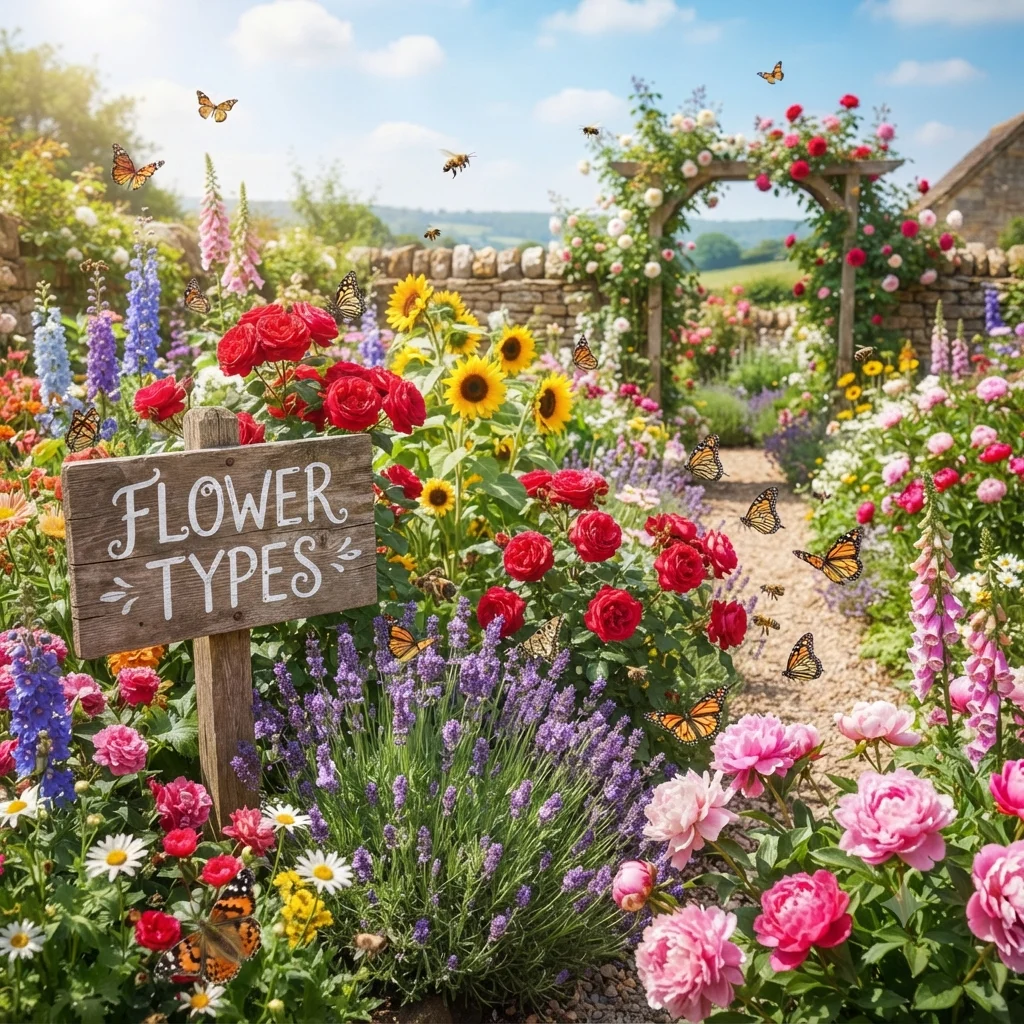
Flower types and names are different kinds of flowers identified by their names, appearance, colors, growth habits, and unique characteristics. Learning flower names and types helps you identify flowers, choose the right plants for your garden, understand their meanings, and appreciate their natural beauty.
A single flower can brighten a garden, celebrate life’s happiest moments, or express emotions that words sometimes cannot. From timeless roses and cheerful sunflowers to graceful lilies, colorful tulips, and foreign orchids, every flower has its own beauty, purpose, and story. Learning flower types and names opens the door to a fascinating world filled with color, fragrance, and incredible diversity.
Instead of wondering, “What flower is this?” or “Which flowers are best for my garden?” this guide makes flower identification simple and enjoyable. Whether you are a beginner, gardening enthusiast, student, florist, or nature lover, knowing the different types of flowers and their names will help you recognize popular blooms, discover rare varieties, and choose the perfect flowers for every occasion.
Flower types and names are useful for gardening, landscaping, school projects, floral arrangements, weddings, gifts, home decoration, and nature studies. Understanding annuals, perennials, wildflowers, tropical flowers, flowering shrubs, and ornamental blooms also makes it easier to select flowers that match your climate, season, and personal style.
In this comprehensive collection, you’ll discover common flower names, beautiful garden flowers, colorful flowering plants, seasonal blooms, fragrant flowers, rare varieties, and many other different types of flowers. Each flower is presented in an easy-to-understand way, making this guide perfect for quick identification and learning.
Explore this ultimate collection of flower types and names to discover beautiful blooms from around the world, expand your knowledge, and find inspiration for your garden, floral arrangements, or next nature adventure. Whether you’re looking for a familiar favorite or hoping to discover something new, you’ll find plenty of flowers to admire and remember.
Classic and Popular Flower Types
These flowers are the most well-known and loved around the world. You will find them in gardens, bouquets, and parks everywhere.
Rose
- Meaning: (ROZE) The queen of flowers. Symbol of love and romance.
- Best for: Gardens, weddings, and expressing love. Comes in many colors.
Tulip
- Meaning: (TOO-lip) A spring flower that grows from a bulb. Symbol of perfect love.
- Best for: Spring gardens and cut bouquets. Very colorful and cheerful.
Sunflower
- Meaning: (SUN-flower) A tall, yellow flower that turns toward the sun.
- Best for: Sunny gardens and making people smile. Great for children.
Daisy
- Meaning: (DAY-zee) A simple, white flower with a yellow center.
- Best for: Wildflower gardens and children’s bouquets. Cheerful and innocent.
Lily
- Meaning: (LIL-ee) A large, fragrant flower with many varieties.
- Best for: Formal gardens and elegant bouquets. Symbol of purity.
Orchid
- Meaning: (OR-kid) An foreign, beautiful flower with many species.
- Best for: Indoor decoration and tropical gardens. Elegant and expensive.
Carnation
- Meaning: (Kar-NAY-shun) A ruffled flower with a spicy scent.
- Best for: Bouquets and corsages. Comes in many bright colors.
Hydrangea
- Meaning: (Hy-DRAN-jee-ah) A large, round cluster of small flowers.
- Best for: Shade gardens and big, dramatic bouquets. Very fluffy.
Peony
- Meaning: (PEE-oh-nee) A large, fluffy, fragrant spring flower.
- Best for: Wedding bouquets and romantic gardens. Very lush and beautiful.
Iris
- Meaning: (EYE-riss) A tall flower named after the Greek rainbow goddess.
- Best for: Sunny gardens and cutting gardens. Comes in many colors.
Spring Flower Types and Names
Spring flowers are the first to bloom after winter. They bring hope and color to the garden.
Tulip
- Meaning: (TOO-lip) A cup-shaped bulb flower. Symbol of spring.
- Best for: Spring gardens and cheerful displays. Available in every color.
Daffodil
- Meaning: (DAF-oh-dil) A yellow, trumpet-shaped flower. Symbol of new beginnings.
- Best for: Spring gardens and brightening up gloomy days.
Hyacinth
- Meaning: (HY-ah-sinth) A very fragrant, spiky flower bulb.
- Best for: Indoor forcing and spring borders. Smells amazing.
Crocus
- Meaning: (KRO-kus) A tiny flower that blooms through snow. Early spring.
- Best for: Lawns and rock gardens. The first sign of spring.
Snowdrop
- Meaning: (SNO-drop) A tiny, white, drooping flower. Very early bloomer.
- Best for: Woodland gardens and under trees. Delicate and brave.
Primrose
- Meaning: (PRIM-rose) A low-growing, colorful spring flower. Means “first rose.”
- Best for: Shaded gardens and borders. Comes in many pastel colors.
Bluebell
- Meaning: (BLUE-bell) A blue, bell-shaped flower that carpets woodlands.
- Best for: Woodland gardens and naturalized areas. Magical and blue.
Pansy
- Meaning: (PAN-zee) A small, cheerful flower with a “face.” Winter and spring bloomer.
- Best for: Window boxes, containers, and borders. Very cute.
Violet
- Meaning: (VYE-let) A tiny, sweet-smelling purple flower.
- Best for: Woodland gardens and shady spots. Delicate and fragrant.
Forget-Me-Not
- Meaning: (For-get-me-not) A tiny, sky-blue flower. Symbol of remembrance.
- Best for: Shaded gardens and memorials. Small but meaningful.
Summer Flower Types and Names
Summer is the peak of flower season. These blooms love the heat and sunshine.
Sunflower
- Meaning: (SUN-flower) A giant, yellow flower that follows the sun.
- Best for: Sunny gardens and children’s gardens. Very cheerful.
Rose
- Meaning: (ROZE) The classic flower. Blooms all summer in many varieties.
- Best for: Formal gardens and romantic bouquets. The flower of love.
Lily
- Meaning: (LIL-ee) A tall, fragrant flower with big petals.
- Best for: Borders and elegant bouquets. Very showy.
Hydrangea
- Meaning: (Hy-DRAN-jee-ah) A big, fluffy cluster of blue or pink flowers.
- Best for: Shaded gardens and big bouquets. Very dramatic.
Peony
- Meaning: (PEE-oh-nee) A giant, fluffy, fragrant flower. Blooms in early summer.
- Best for: Wedding bouquets and romantic gardens. Very luxurious.
Daisy
- Meaning: (DAY-zee) A cheerful, white flower with a yellow center.
- Best for: Lawn gardens and children’s bouquets. Innocent and happy.
Lavender
- Meaning: (LAV-en-der) A purple, fragrant herb with small flowers.
- Best for: Cottage gardens and dried bouquets. Smells relaxing.
Coneflower
- Meaning: (KONE-flower) A daisy-like flower with a raised center.
- Best for: Butterfly and pollinator gardens. Very hardy.
Black-Eyed Susan
- Meaning: (Black-eyed SOO-zan) A yellow, daisy-like flower with a dark center.
- Best for: Wildflower gardens and sunny borders. Tough and bright.
Zinnia
- Meaning: (ZIN-ee-ah) A bright, colorful flower that blooms all summer.
- Best for: Cutting gardens and children’s gardens. Very easy to grow.
Autumn Flower Types and Names
Autumn flowers bring warm colors to the cooling weather. They are perfect for fall gardens.
Chrysanthemum
- Meaning: (Kris-AN-the-mum) A fall flower with many petals. Called “mums.”
- Best for: Fall gardens and autumn displays. Comes in warm colors.
Aster
- Meaning: (ASS-ter) A daisy-like flower that blooms in fall. Means “star.”
- Best for: Fall gardens and borders. Purple and pink colors.
Marigold
- Meaning: (MARE-ee-gold) A bright orange or yellow flower. Blooms until frost.
- Best for: Vegetable gardens and fall displays. Very hardy.
Sedum
- Meaning: (SEE-dum) A succulent plant with pink, star-shaped flowers in fall.
- Best for: Rock gardens and dry spots. Very tough and drought-resistant.
Goldenrod
- Meaning: (GOLD-en-rod) A tall plant with yellow flower spikes.
- Best for: Wildflower gardens and meadows. Golden and cheerful.
Sunflower
- Meaning: (SUN-flower) Late summer and early fall bloomer.
- Best for: Fall gardens and bird feeders. Great for seeds.
Cosmos
- Meaning: (KOZ-mos) A tall, daisy-like flower that blooms until frost.
- Best for: Cutting gardens and borders. Airy and colorful.
Snapdragon
- Meaning: (SNAP-dragon) A tall, colorful flower that looks like a dragon’s mouth.
- Best for: Cutting gardens and borders. Fun for children.
Pansy
- Meaning: (PAN-zee) A cheerful, cold-tolerant flower that blooms into fall.
- Best for: Window boxes and containers. Cute and colorful.
Toad Lily
- Meaning: (TODE LIL-ee) A spotted, orchid-like flower that blooms in fall shade.
- Best for: Shaded gardens and woodland areas. foreign and unique.
Tropical and foreign Flower Types
These flowers come from warm, tropical climates. They look foreign and dramatic.
Orchid
- Meaning: (OR-kid) The most foreign flower family. Many shapes and colors.
- Best for: Indoor plants and tropical gardens. Elegant and special.
Bird of Paradise
- Meaning: (Bird of PAR-ah-dize) A flower that looks like a tropical bird.
- Best for: Tropical gardens and large pots. Dramatic and unique.
Hibiscus
- Meaning: (Hih-BISS-kus) A large, tropical flower with a prominent stamen.
- Best for: Tropical gardens and summer displays. Very showy.
Plumeria
- Meaning: (Ploo-MARE-ee-ah) A fragrant, five-petaled flower. Used in leis.
- Best for: Tropical gardens and warm climates. Smells like heaven.
Bougainvillea
- Meaning: (Boo-gan-VIL-ee-ah) A vine with colorful bracts (not true flowers).
- Best for: Warm climates, walls, and trellises. Very colorful.
Anthurium
- Meaning: (An-THUR-ee-um) A heart-shaped flower with a spike. Called “flamingo flower.”
- Best for: Indoor plants and tropical displays. Shiny and red.
Bromeliad
- Meaning: (Bro-MEE-lee-ad) A tropical plant with a colorful central flower.
- Best for: Indoor plants and warm climates. Very hardy.
Ginger
- Meaning: (JIN-jer) A tropical plant with beautiful, fragrant flower cones.
- Best for: Tropical gardens and warm climates. Unique and spicy.
Heliconia
- Meaning: (Hel-ih-KON-ee-ah) A tropical flower with hanging, lobster-claw shapes.
- Best for: Large tropical gardens. Very dramatic and bold.
Passionflower
- Meaning: (PASH-un-flower) A complex, beautiful flower with a spiritual meaning.
- Best for: Tropical and warm gardens. Very intricate and unique.
Wildflower Types and Names
Wildflowers grow naturally without human help. They are tough, beautiful, and good for pollinators.
Daisy
- Meaning: (DAY-zee) The classic meadow flower. Simple and cheerful.
- Best for: Meadows, lawns, and wildflower gardens.
Coneflower
- Meaning: (KONE-flower) A hardy, daisy-like flower with a raised center.
- Best for: Pollinator gardens and prairies. Loved by bees and butterflies.
Black-Eyed Susan
- Meaning: (Black-eyed SOO-zan) A bright, yellow flower with a dark center.
- Best for: Meadows and wildflower gardens. Very tough and cheerful.
Bluebell
- Meaning: (BLUE-bell) A blue, bell-shaped flower that carpets woodlands.
- Best for: Woodland gardens and shady areas. Magical in spring.
Wild Rose
- Meaning: (Wild ROZE) A simple, five-petaled rose. Very tough and fragrant.
- Best for: Hedgerows and naturalized gardens. Beautiful and thorny.
Buttercup
- Meaning: (BUT-er-kup) A bright yellow, shiny wildflower.
- Best for: Meadows and lawn areas. Children love them.
Poppy
- Meaning: (POP-ee) A bright, papery flower. Red, orange, or yellow.
- Best for: Wildflower meadows and sunny borders. Very striking.
Yarrow
- Meaning: (YAR-oh) A flower with flat clusters of tiny blooms.
- Best for: Meadows and dry gardens. Medicinal and tough.
Lupine
- Meaning: (LOO-pin) A tall flower with blue, purple, or pink spikes.
- Best for: Wildflower gardens and meadows. Very beautiful.
Queen Anne’s Lace
- Meaning: (Queen Annes LACE) A white, lacy flower. The wild carrot.
- Best for: Meadows and roadside areas. Very delicate.
35+Medieval Girl Names With Beautiful Meanings & Noble Origins
Fragrant Flower Types and Names
These flowers smell amazing. They are perfect for gardens near windows and walkways.
Rose
- Meaning: (ROZE) The classic fragrant flower. Many varieties have strong scents.
- Best for: Garden borders and bouquets. The queen of fragrance.
Lavender
- Meaning: (LAV-en-der) A calming, relaxing, sweet-smelling herb.
- Best for: Cottage gardens, dried bouquets, and sachets.
Lily
- Meaning: (LIL-ee) Many lilies have a very strong, beautiful scent.
- Best for: Bouquets and formal gardens. Very fragrant.
Jasmine
- Meaning: (JAZ-min) A sweet, intoxicating, night-blooming vine.
- Best for: Trellises near windows and warm gardens.
Gardenia
- Meaning: (Gar-DEEN-ee-ah) A creamy-white flower with a heavy, sweet scent.
- Best for: Indoor pots and warm, humid gardens. Very perfumed.
Hyacinth
- Meaning: (HY-ah-sinth) A very strong-scented spring bulb flower.
- Best for: Indoor forcing and spring borders. Very overpowering.
Lilac
- Meaning: (LYE-lak) A spring shrub with sweet, purple flower clusters.
- Best for: Large gardens and hedgerows. Springtime favorite.
Peony
- Meaning: (PEE-oh-nee) A giant, fluffy flower with a sweet, romantic scent.
- Best for: Wedding bouquets and romantic gardens.
Sweet Pea
- Meaning: (Sweet PEA) A climbing vine with tiny, sweet-smelling flowers.
- Best for: Trellises and cutting gardens. Very old-fashioned.
Mock Orange
- Meaning: (Mock OR-ange) A shrub with flowers that smell like orange blossoms.
- Best for: Large gardens and hedges. Very fragrant in early summer.
Flower Types for Pollinators
These flowers attract bees, butterflies, and other helpful insects. They are great for the environment.
Coneflower
- Meaning: (KONE-flower) A daisy-like flower loved by bees and butterflies.
- Best for: Pollinator gardens and prairie-style planting.
Lavender
- Meaning: (LAV-en-der) Attracts bees with its purple color and sweet smell.
- Best for: Sunny, dry gardens. Great for honey production.
Sunflower
- Meaning: (SUN-flower) Bees and birds love the big, flat flower heads.
- Best for: Children’s gardens and sunny borders.
Butterfly Bush
- Meaning: (BUT-er-fly Bush) A shrub that attracts butterflies with its flowers.
- Best for: Sunny gardens and wildlife areas.
Milkweed
- Meaning: (MILK-weed) The only plant Monarch butterflies eat.
- Best for: Wildflower gardens and meadows. Essential for butterflies.
Bee Balm
- Meaning: (BEE BAHM) A red or pink flower that bees and hummingbirds love.
- Best for: Sunny borders and pollinator gardens.
Goldenrod
- Meaning: (GOLD-en-rod) A late-season flower that feeds bees before winter.
- Best for: Wildflower gardens and meadows. Very important.
Sedum
- Meaning: (SEE-dum) A late-blooming flower that bees love in autumn.
- Best for: Dry gardens and rock gardens.
Aster
- Meaning: (ASS-ter) A fall-blooming flower that attracts late-season butterflies.
- Best for: Fall gardens and borders.
Zinnia
- Meaning: (ZIN-ee-ah) Bright, colorful flowers that butterflies cannot resist.
- Best for: Cutting gardens and children’s gardens.
Edible Flower Types and Names
Some flowers are not just pretty. They are also tasty and safe to eat.
Rose
- Meaning: (ROZE) Rose petals are edible and used in jams and teas.
- Best for: Culinary gardens and making rose water.
Lavender
- Meaning: (LAV-en-der) Used in baking, teas, and savory dishes.
- Best for: Herb gardens and cooking. Very versatile.
Nasturtium
- Meaning: (Nah-STUR-shee-um) A bright flower with a peppery taste.
- Best for: Vegetable gardens and salads. Leaves and flowers are edible.
Pansy
- Meaning: (PAN-zee) A cute, edible flower used to decorate cakes.
- Best for: Decorative baking and salads. Very colorful.
Calendula
- Meaning: (Kah-LEN-dyoo-lah) A yellow or orange flower used in soups.
- Best for: Vegetable and herb gardens. Called “poor man’s saffron.”
Chamomile
- Meaning: (KAM-oh-mile) A small, daisy-like flower used for calming tea.
- Best for: Herb gardens and relaxing teas.
Viola
- Meaning: (VYE-oh-lah) A small, edible flower often used in salads.
- Best for: Decorative baking and salads. Very cute.
Borage
- Meaning: (BOR-ij) A star-shaped blue flower with a cucumber taste.
- Best for: Herb gardens and summer drinks.
Honeysuckle
- Meaning: (HUN-ee-suk-ull) A sweet, fragrant flower with edible nectar.
- Best for: Trellises and hedges. Children love sucking the nectar.
Chive
- Meaning: (CHIVE) A herb with purple, onion-tasting flowers.
- Best for: Herb gardens and salads. The flowers taste like onions.
Rare and Unusual Flower Types
These flowers are not common. They are rare, strange, or grow in very specific places.
Corpse Flower
- Meaning: (KORPS flower) The largest flower in the world. Smells like rotting meat.
- Best for: Botanical gardens only. Very rare and smelly.
Rafflesia
- Meaning: (Raf-FLEE-zee-ah) A parasitic flower that smells like death.
- Best for: Tropical jungles. Very rare and weird.
Ghost Orchid
- Meaning: (GHOST OR-kid) A rare, leafless orchid that looks like a ghost.
- Best for: Swampy areas in Florida and Cuba. Very mysterious.
Naked Man Orchid
- Meaning: (NAY-ked Man OR-kid) A flower that looks like a tiny, naked man.
- Best for: Mediterranean gardens. Funny and unusual.
Angel’s Trumpet
- Meaning: (AYN-jels TRUM-pet) A hanging flower that is very poisonous but beautiful.
- Best for: Warm gardens and large pots. Very dangerous.
Black Bat Flower
- Meaning: (Black BAT flower) A flower that looks like a black bat.
- Best for: Tropical greenhouses. Very spooky and unique.
Flying Duck Orchid
- Meaning: (FLY-ing DUK OR-kid) A flower that looks like a flying duck.
- Best for: Australian gardens. Quacky and special.
Parrot Flower
- Meaning: (PAIR-it flower) A flower that looks like a parrot in flight.
- Best for: Tropical gardens. Bright and colorful.
Venus Flytrap
- Meaning: (VEE-nus FLY-trap) A carnivorous plant that catches and eats insects.
- Best for: Carnivorous plant collections. Fun and creepy.
Chocolate Cosmos
- Meaning: (CHOK-lit KOZ-mos) A brown flower that smells like chocolate.
- Best for: Warm gardens and pots. Smells delicious.
Flower Types by Color
Some people choose flowers by their favorite color. Here are the best flowers in different colors.
Red Flowers
- Best red flowers: Rose, Tulip, Poppy, Carnation, Geranium.
- Meaning: Love, passion, and courage.
Pink Flowers
- Best pink flowers: Peony, Rose, Carnation, Hydrangea, Cosmos.
- Meaning: Gentle love, gratitude, and sweetness.
Yellow Flowers
- Best yellow flowers: Sunflower, Daffodil, Marigold, Goldenrod, Black-Eyed Susan.
- Meaning: Joy, friendship, and new beginnings.
Blue Flowers
- Best blue flowers: Bluebell, Hydrangea, Iris, Cornflower, Delphinium.
- Meaning: Calm, peace, and tranquility.
Purple Flowers
- Best purple flowers: Lavender, Lilac, Iris, Aster, Crocus.
- Meaning: Royalty, spirituality, and mystery.
White Flowers
- Best white flowers: Lily, Daisy, Rose, Snowdrop, Magnolia.
- Meaning: Purity, innocence, and peace.
Orange Flowers
- Best orange flowers: Marigold, Poppy, Zinnia, Sunflower, Tulip.
- Meaning: Energy, excitement, and warmth.
Green Flowers
- Best green flowers: Hydrangea, Chrysanthemum, Orchid, Carnation.
- Meaning: Nature, renewal, and good luck.
Conclusion
The world of flowers is full of beauty and wonder. There are so many flower types and names to discover. From the common rose to the rare corpse flower, each bloom has its own story. Whether you love spring tulips, summer sunflowers, or fall chrysanthemums, flowers bring joy to our lives.
Learning different flower names helps you appreciate nature more. You can choose the perfect flowers for your garden, your home, or a special gift. The best flower varieties are the ones that make you smile. They brighten up any space and lift your spirits.
Flowers also teach us a lesson. They bloom for a short time, but they make the most of it. They are patient, growing from tiny seeds to beautiful blossoms. Every time you see a flower, remember to enjoy the moment. Now that you know more about flowers, go outside and appreciate the beauty of nature. The perfect flower is waiting for you to discover it.
(FAQS)
Q1: What is the most popular flower in the world?
A: The rose is the most popular flower in the world. It is loved for its beauty, fragrance, and meaning of love.
Q2: What flower blooms in spring first?
A: Snowdrops and crocuses are usually the first flowers to bloom in late winter and early spring. They push through snow to bloom.
Q3: What is the smelliest flower?
A: The corpse flower is the smelliest flower in the world. It smells like rotting meat to attract flies for pollination.
Q4: Are any flowers edible?
A: Yes, many flowers are edible including roses, lavender, nasturtiums, and violets. Always make sure they are safe before eating them.
Q5: What flowers attract the most butterflies?
A: Butterfly bush, milkweed, cone flowers, and zinnias are the best flowers for attracting butterflies to your garden.
Mary Butts was a British modernist writer known for her experimental style, myth-inspired themes, and influential novels exploring psychology and spirituality.