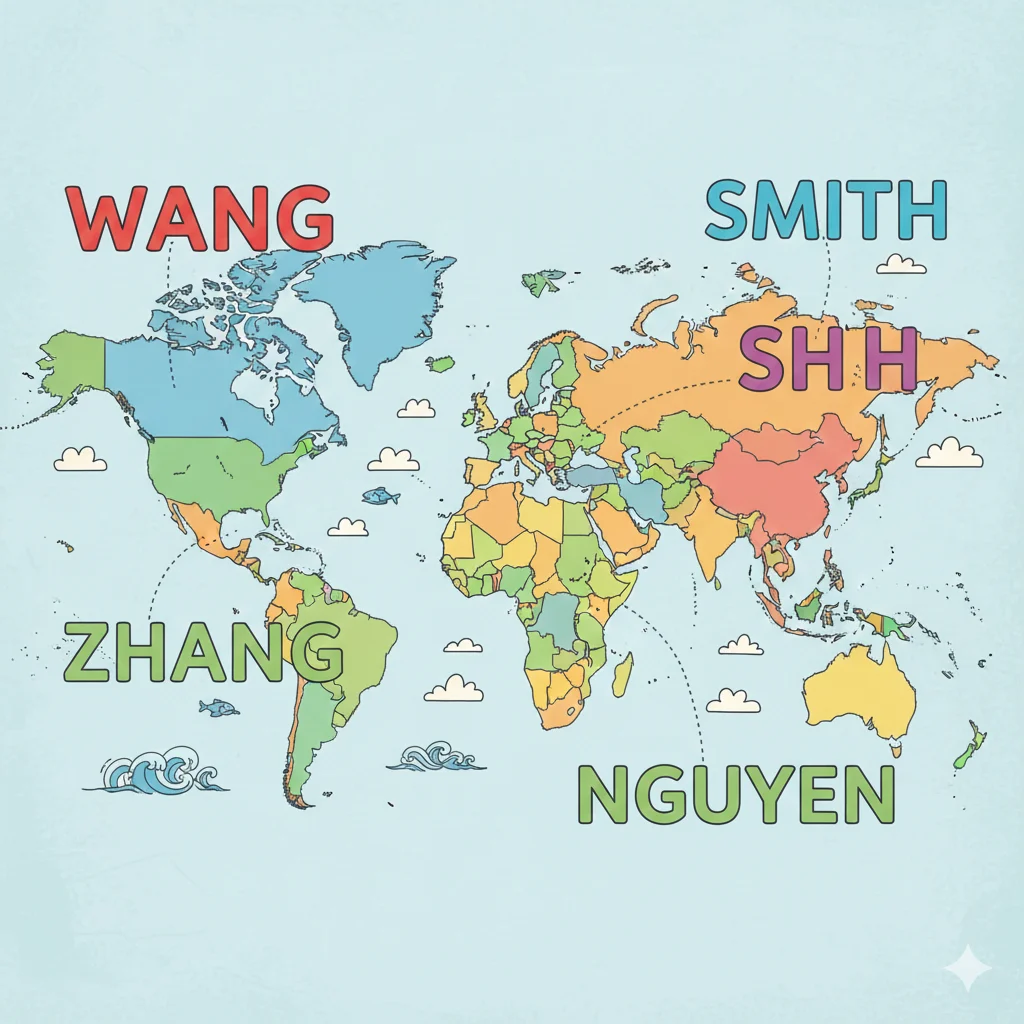
Have you ever wondered what the most common last names in the world are? Names like Li, Zhang, and Wang top the global list, shared by hundreds of millions. These common surnames are not just labels; they are living history books. They tell stories of ancient jobs, family ties, and geography. Understanding the most popular family names unlocks a map of human movement, culture, and connection. This article is your guide to the fascinating world of surnames.
Last names, or surnames, help identify our family lineage. They were created for practical reasons, like telling people apart in growing towns. Some names came from a father’s first name (like Johnson, “son of John”). Others came from a person’s job, like Smith (metalworker) or Baker. Many came from landscape features, like Hill or Rivers.
You care about these names because they are a piece of your own story. Even if your name isn’t on the “most common” list, learning about them shows how we are all linked. It’s a fun way to explore history and see the echoes of the past in our modern classrooms, offices, and communities. Let’s dive into the map of the most common last names on Earth and discover what they mean.
The Most Common Last Names for Boys
- Wang (Chinese): Meaning “king” or “monarch.” A strong, regal, and classic vibe.
- Best for a character who is a natural leader, dependable, and carries a sense of quiet authority.
- Singh (Hindi/Sanskrit): Means “lion.” A powerful, brave, and noble surname.
- Perfect for a warrior, a leader, or any character known for their courage and strength.
- Kim (Korean): The most common Korean surname, derived from an ancient kingdom’s name. It feels modern, sleek, and globally recognized.
- Suits a character who is intelligent, adaptable, and has a strong sense of identity and family.
- Khan (Central Asian): A historic title meaning “ruler” or “chief.” It carries connotations of command, legacy, and respect.
- Ideal for a character with a commanding presence, from a noble lineage, or a natural strategist.
The Most Common Last Names for Girls
- Li (Chinese): Means “plum” or “plum tree.” It suggests beauty, resilience, and grace under pressure, as the plum tree blooms in winter.
- Perfect for a character who is elegant, strong-willed, and has a quiet, enduring inner strength.
- García (Spanish): Originates from a Basque word meaning “young” or “bear.” It feels strong, earthy, and familial.
- Suits a grounded, protective character with deep roots and a loyal, fierce heart.
- Nguyễn (Vietnamese): The most common surname in Vietnam, linked to ancient royal dynasties. It has a melodic, graceful, and historic feel.
- Ideal for a character with a rich heritage, artistic talent, or a calm, dignified presence.
- Patel (Gujarati/Indian): Originally a title for a village leader or landowner. It implies responsibility, community, and reliability.
- Best for a pragmatic, smart, and community-oriented character who is a natural problem-solver.
Most Common Unisex Last Names
- Zhang (Chinese): Means “stretch a bow” or “archer.” It conveys skill, focus, and an artistic or precise nature.
- Great for a character who is a strategic thinker, a talented artist, or someone with a long-reaching vision.
- Chen (Chinese): Means “to explain” or “ancient.” It carries a scholarly, wise, and timeless quality.
- Suits a teacher, historian, philosopher, or any character who seeks and values deep understanding.
- Martínez (Spanish): A patronymic meaning “son of Martín” (Mars, god of war). It’s energetic, common, and carries a spark of drive.
- Perfect for a passionate, active, and determined character who is always on a mission.
- Smith (English): The most common surname in the English-speaking world. It means “metalworker.” It suggests practicality, creation, and hard work.
- Ideal for a builder, inventor, maker, or any down-to-earth character who works with their hands or solves real problems.
Unique Last Names from Around the World
- Bartholomew (Aramaic): Means “son of Talmai” (furrowed, rich in land). It sounds distinguished and old-world.
- Suits a character with an air of mystery, an ancient family secret, or a connection to history.
- Dela Cruz (Spanish): Means “of the cross.” It has a strong religious or symbolic connection and a poetic flow.
- Perfect for a character on a quest, with a strong moral compass, or a symbolic destiny.
- Sokolov (Russian): Means “son of the falcon” (Sokol). It suggests sharp vision, speed, and nobility.
- Ideal for a spy, a scout, an athlete, or a character with keen perception and a free spirit.
- Kovács (Hungarian): The Hungarian version of “Smith.” It feels unique, strong, and central European.
- Best for a sturdy, reliable, and skilled character, perhaps from a family of artisans or fighters.
Funny and Playful Last Names
- Goforth (English): An energetic, encouraging name that literally says “go forth!”
- Perfect for an optimistic adventurer, a motivational coach, or a character who never gives up.
- Goodenough (English): A humble, self-deprecating, or ironically confident name.
- Suits a laid-back character who is surprisingly capable, or one with a great sense of humor about themselves.
- Glasscock (English): A name that certainly gets attention and can imply boldness or fragility.
- Best for a character who is either incredibly brave or needs to prove their toughness.
- Outlaw (English): Direct, cool, and rebellious. It speaks for itself.
- Ideal for a rogue, a rebel with a cause, or anyone living outside the rules.
Trendy and Modern Last Names
- Archer (English): A stylish occupational name that suggests precision, focus, and a modern edge.
- Great for a tech genius, a sharp businessperson, or a character with a very targeted goal.
- Sterling (English): Means “of the highest quality.” It implies value, class, and sleekness.
- Suits a successful entrepreneur, a character with impeccable taste, or one associated with wealth and quality.
- Sage (English/French): Means “wise.” It’s short, nature-connected, and feels intentionally chosen.
- Perfect for a healer, a counselor, a environmentalist, or a character known for their calm wisdom.
- Beckett (English): Means “beehive” or “brook.” It has a literary, cool, and grounded vibe.
- Ideal for an artist, writer, or a character who is both creative and deeply connected to nature.
Fantasy-Inspired Last Names
- Stormweaver (Fantasy): Implies one who controls or crafts storms. It’s powerful and elemental.
- Perfect for a powerful mage, a weather-controlling deity, or a hero with a tempestuous power.
- Moonshadow (Fantasy): Suggests stealth, mystery, and a connection to the night.
- Suits an assassin, a spy, a nocturnal creature, or a mysterious guide.
- Ironwood (Fantasy): Combines unbreakable strength with natural growth. It feels ancient and resilient.
- Best for a steadfast guardian, an ancient tree spirit, or a dwarf lord.
- Lightbringer (Fantasy): A heroic, hopeful name for one who banishes darkness.
- Ideal for a paladin, a chosen hero, or a character whose very presence inspires hope.
Mythical and Historical Last Names
- Pendragon (Welsh/British Legend): Means “chief dragon” or “head leader,” famously used by King Arthur’s father.
- The ultimate name for a legendary king, a destined ruler, or a mythic hero.
- Aethelred (Old English): Means “noble counsel.” It sounds ancient, royal, and Anglo-Saxon.
- Suits a wise old king, a noble from a bygone era, or a character in a historical epic.
- Valerius (Roman): Derived from the Latin “valere” (to be strong, healthy). It carries the weight of the Roman Empire.
- Perfect for a senator, a general, or a character known for their strength and moral fortitude in a classical setting.
- Yamamoto (Japanese): Means “base of the mountain.” It evokes stability, permanence, and a connection to nature and clan.
- Ideal for a samurai, a family elder, or a character whose strength is as enduring as a mountain.
Meaningful and Strong Last Names
- Armstrong (English/Scottish): Literally “strong arm.” It implies physical power, resilience, and capability.
- Suits a warrior, a blacksmith, an athlete, or any character known for their formidable strength.
- Justice (English): A virtue name that is direct and powerful. It implies fairness, law, and moral righteousness.
- Perfect for a judge, a crusading lawyer, a superhero, or a character driven by a powerful moral code.
- King (English): The ultimate surname of authority and leadership. It is simple and commanding.
- Best for a born leader, a person of great ambition, or a character with a regal bearing.
- Peace (English): A beautiful, hopeful virtue name. It suggests a calm, diplomatic, or healing nature.
- Ideal for a mediator, a healer, a diplomat, or a character who is the calming center of their world.
Conclusion:
Our journey through the most common last names in the world shows us more than just a list. It reveals a story of humanity. From the regal Wang of China to the hardworking Smith of England, these names are footprints of history. They show us how people lived, worked, and moved across the globe.
Choosing a name, whether for a character or learning about your own, connects you to this big story. These most common family names are a shared heritage. They remind us that our families, and our stories, are part of a much larger picture. So next time you hear a common surname, remember—it’s not just a name. It’s a piece of a living, global history book, and you have a chapter in it too.
(FAQ)
Q1: What is the most common last name in the world?
A: The most common last name in the world is the Chinese surname Li (or Lee), with over 100 million people.
Q2: Are the most common last names only from China?
A: No, while Chinese names are extremely common due to population size, the list of the most common last names includes names from Vietnam (Nguyễn), India (Patel, Singh), Korea (Kim), and the Spanish-speaking world (García, Martínez).
Q3: Why are some of the most common last names so short?
A: Many of the most common last names, especially from East Asia, are one syllable (Li, Wang, Kim). This often relates to the structure and history of the language they come from.
Q4: How did the most common last names in English, like Smith, become so popular?
A: Names like Smith became the most common last names because they described a vital job (blacksmith). In growing medieval villages, many people had this job, so the name was given to many families.
Q5: Can the most common last names change over time?
A: The ranking of the most common last names can shift slowly with global migration and population changes, but the top names have been established for centuries due to their deep historical roots.
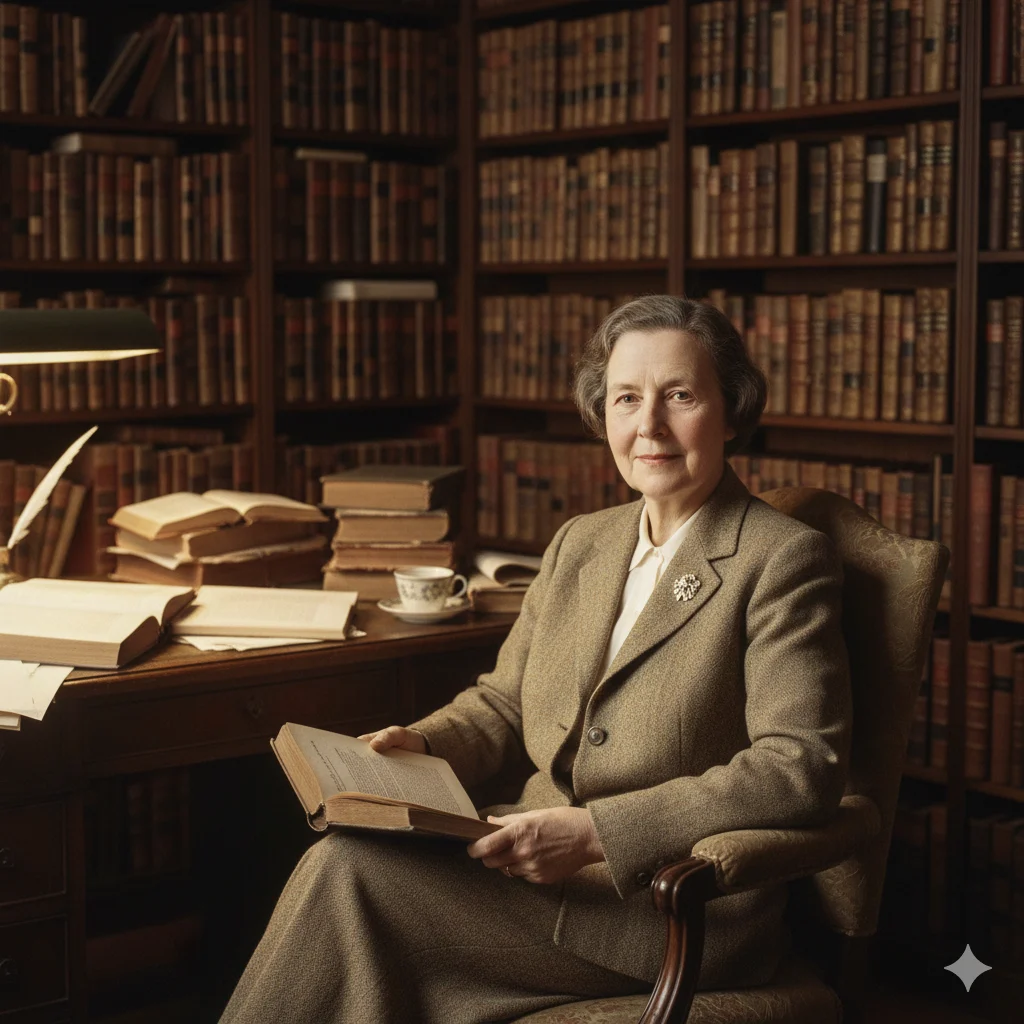
Hilda Hulme was a literary scholar known for her sharp research, influential writings, and valuable contributions to English language and historical literature studies.