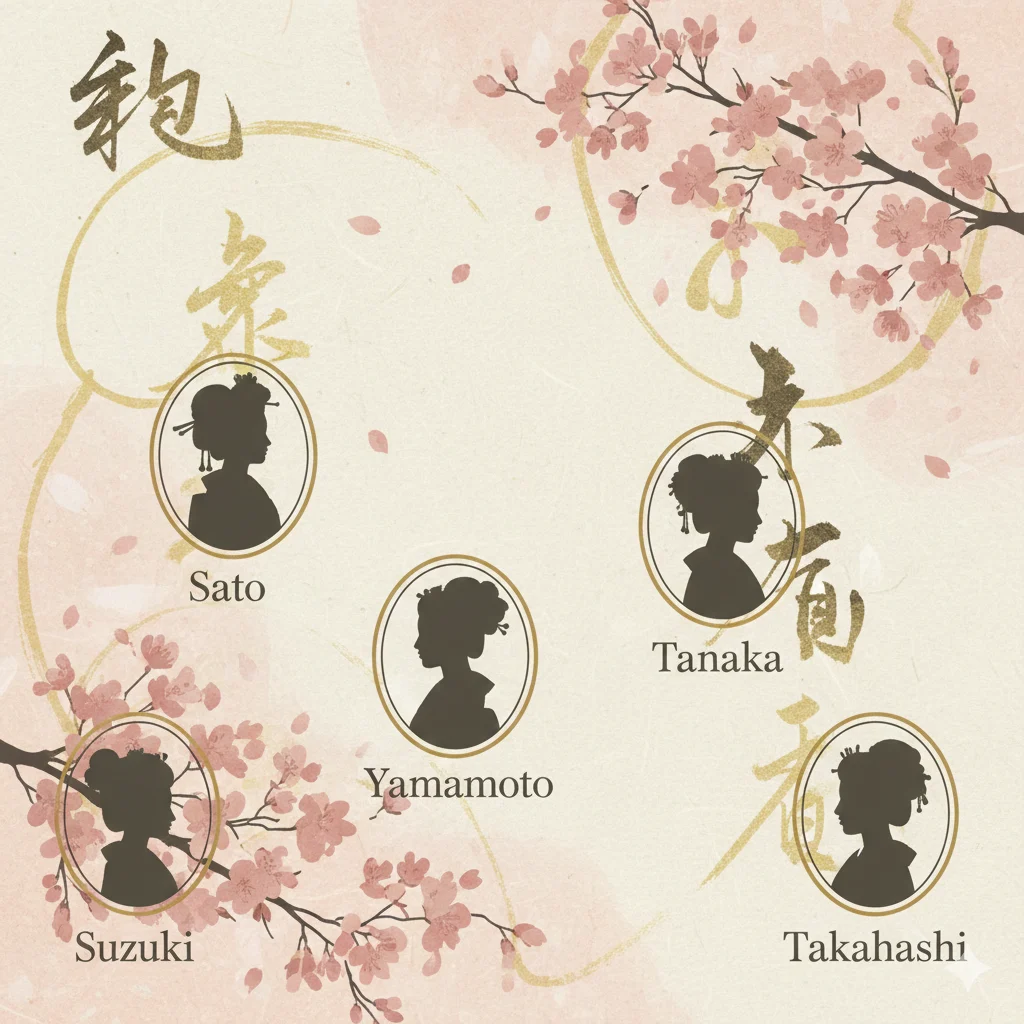
“Japanese girl last names are traditional family surnames—usually gender-neutral—that often reflect nature, geography, and cultural heritage.”
Ever wondered why so many Japanese last names sound poetic and elegant? When people search for Japanese girl last names, they are usually looking for surnames that feel graceful, meaningful, or perfect for a female character.
However, it’s important to understand that Japanese surnames are typically gender-neutral family names, not exclusively for girls. Their beauty often comes from the kanji characters, which carry rich meanings connected to nature, landscapes, and history.
For example, names like Sato (藤), Takahashi (高橋), and Nakamura (中村) reflect elements such as wisteria fields, tall bridges, or central villages. Many Japanese surnames became officially required during the Meiji era, shaping modern naming traditions.
Whether you’re a writer creating a character, a parent exploring name ideas, or someone fascinated by Japanese culture, this guide will introduce you to beautiful, popular, and meaningful Japanese girl last names, along with their origins and interpretations.
The Charm of Nature-Inspired Surnames
Nature is the biggest source of beauty in Japanese culture. These last names sound soft and feminine because they remind us of peaceful scenes like flowers, trees, and clear skies.
Popular Japanese Girl Last Names
These are the names you will hear most often in Japan today. They are classic, easy to pronounce, and fit almost any personality.
- Sato (SAH-toh)
Meaning: “Wisteria” and “village.” It gives off a vibe of elegance and tradition.
This name suits a character or person who is graceful, popular, and deeply connected to their community. - Suzuki (SOO-zoo-kee)
Meaning: “Bell tree.” It has a cheerful, energetic, and lively vibe.
Perfect for someone who is hardworking, optimistic, and brings joy to those around them, like a creative soul. - Takahashi (Tah-kah-HAH-shee)
Meaning: “High bridge.” It suggests ambition, vision, and connection.
This name fits a leader or a visionary, someone who helps others cross difficult paths in life. - Tanaka (Tah-NAH-kah)
Meaning: “Inside the rice field.” It feels down-to-earth, wholesome, and reliable.
Ideal for a friendly, approachable person who is the heart of their family or friend group. - Watanabe (Wah-tah-NAH-beh)
Meaning: “Traveling across the river.” It carries a vibe of adventure and adaptability.
Best suited for an explorer, a traveler, or someone who embraces change and new experiences. - Ito (EE-toh)
Meaning: “This wisteria.” It feels artistic, delicate, and refined.
This name is great for a creative type, perhaps a musician or painter, with a sensitive soul. - Yamamoto (Yah-mah-MOH-toh)
Meaning: “Base of the mountain.” It suggests strength, stability, and protection.
A wonderful fit for a dependable person, a protector, or someone with a strong foundation. - Nakamura (Nah-kah-MOO-rah)
Meaning: “Middle of the village.” It has a vibe of community, balance, and harmony.
Great for a peacemaker, a mediator, or someone who thrives in a social setting. - Kobayashi (Koh-bah-YAH-shee)
Meaning: “Small forest.” It feels peaceful, humble, and connected to nature.
This suits a quiet, introspective person who finds peace in solitude and the natural world. - Kato (KAH-toh)
Meaning: “Increase wisteria.” It carries a vibe of growth, prosperity, and success.
Perfect for an ambitious go-getter, a business owner, or someone destined for greatness.
Unique and Rare Japanese Last Names for Girls
If you want a name that stands out from the crowd, these rare gems are perfect. They are not as common, making them feel special and distinctive.
- Shimizu (SHE-mee-zoo)
Meaning: “Pure water.” Pronunciation: SHE-mee-zoo.
This name suits a person with a clear mind, pure heart, and a calming, refreshing presence. - Amano (Ah-MAH-noh)
Meaning: “Heavenly field.” Pronunciation: Ah-MAH-noh.
Ideal for someone dreamy, spiritual, or with their head in the clouds, like an artist or an idealist. - Niijima (Nee-ee-JEE-mah)
Meaning: “New island.” Pronunciation: Nee-ee-JEE-mah.
Perfect for a pioneer, an innovator, or someone who creates their own path in life. - Mori (MOH-ree)
Meaning: “Forest.” Pronunciation: MOH-ree.
This fits a mysterious, wise, and grounded person who protects others, like a gentle giant. - Nozaki (Noh-ZAH-kee)
Meaning: “Cape.” Pronunciation: Noh-ZAH-kee.
Suits someone who stands at the edge of trends, always looking forward to the future. - Hamasaki (Hah-mah-SAH-kee)
Meaning: “Cape of the beach.” Pronunciation: Hah-mah-SAH-kee.
A great name for a free spirit who loves the ocean and has a breezy, carefree personality. - Miyazaki (Mee-yah-ZAH-kee)
Meaning: “Shrine cape.” Pronunciation: Mee-yah-ZAH-kee.
This name evokes a magical, creative vibe, perfect for a storyteller or a dreamer. - Kagawa (Kah-GAH-wah)
Meaning: “Fragrant river.” Pronunciation: Kah-GAH-wah.
Suits someone with a sweet, pleasant personality that makes everyone feel comfortable. - Sonoda (Soh-NOH-dah)
Meaning: “Rice paddy of the temple.” Pronunciation: Soh-NOH-dah.
Fits a spiritual, calm, and wise individual who values tradition and inner peace. - Fukui (Foo-KOO-ee)
Meaning: “Fortunate well.” Pronunciation: Foo-KOO-ee.
A lucky name for someone who brings happiness and good fortune to those around them.
Cute and Sweet Japanese Girl Last Names
These names have a soft sound and a gentle meaning. They are perfect for a kind-hearted or youthful character.
- Kawai (Kah-WAH-ee)
Meaning: “Peace” and “love.” Pronunciation: Kah-WAH-ee.
This name literally sounds like “kawaii” (cute) and is perfect for a sweet, lovable person. - Hoshino (Hoh-SHEE-noh)
Meaning: “Field of stars.” Pronunciation: Hoh-SHEE-noh.
Ideal for someone who sparkles, a dreamer who lights up a room with their presence. - Kotani (Koh-TAH-nee)
Meaning: “Small valley.” Pronunciation: Koh-TAH-nee.
Suits a humble, cozy person who makes a safe and comfortable home for loved ones. - Nishimura (Nee-shee-MOO-rah)
Meaning: “West village.” Pronunciation: Nee-shee-MOO-rah.
Fits a warm, welcoming person, like the feeling of the setting sun. - Sakurai (Sah-koo-RYE)
Meaning: “Cherry blossom well.” Pronunciation: Sah-koo-RYE.
Perfect for a beautiful, kind soul whose life brings joy to others, like cherry blossoms in spring. - Azuma (Ah-ZOO-mah)
Meaning: “East.” Pronunciation: Ah-ZOO-mah.
A bright name for someone optimistic, associated with the sunrise and new beginnings. - Mochizuki (Moh-chee-ZOO-kee)
Meaning: “Full moon.” Pronunciation: Moh-chee-ZOO-kee.
Suits a calm, serene, and perfectly balanced individual who is content with life. - Tanabata (Tah-nah-BAH-tah)
Meaning: “Evening of the seventh.” Pronunciation: Tah-nah-BAH-tah.
A romantic name for a hopeful person, inspired by the star festival. - Himawari (Hee-mah-WAH-ree)
Meaning: “Sunflower.” Pronunciation: Hee-mah-WAH-ree.
Fits an energetic, cheerful person who always turns toward the positive side of life. - Uzuki (OO-zoo-kee)
Meaning: “Rabbit” or the month of April. Pronunciation: OO-zoo-kee.
A cute, spring-like name for someone gentle, quick, and soft.
Strong and Powerful Japanese Last Names
These names convey strength, resilience, and authority. They are perfect for leaders, warriors, or characters with a commanding presence.
- Kuroki (Koo-ROH-kee)
Meaning: “Black tree.” Pronunciation: Koo-ROH-kee.
This name suggests mystery, deep roots, and unshakable strength. - Matsumoto (Mah-tsuu-MOH-toh)
Meaning: “Base of the pine tree.” Pronunciation: Mah-tsuu-MOH-toh.
Suits someone as enduring and resilient as a pine tree that stands tall through winter. - Inoue (Ee-noh-OO-eh)
Meaning: “Above the well.” Pronunciation: Ee-noh-OO-eh.
Fits a leader who stands above the crowd, with a clear vision and perspective. - Ogawa (Oh-GAH-wah)
Meaning: “Small river.” Pronunciation: Oh-GAH-wah.
Though small, rivers are persistent. This suits someone who overcomes obstacles through gentle persistence. - Takeuchi (Tah-keh-OO-chee)
Meaning: “Inside the bamboo.” Pronunciation: Tah-keh-OO-chee.
Bamboo is strong but flexible. Perfect for someone who bends but never breaks under pressure. - Ishikawa (Ee-shee-KAH-wah)
Meaning: “Stone river.” Pronunciation: Ee-shee-KAH-wah.
A hard, solid name for a tough, reliable person who is as sturdy as a rock. - Maeda (Mah-eh-DAH)
Meaning: “Front of the rice field.” Pronunciation: Mah-eh-DAH.
This suits a leader, someone who is always at the forefront, guiding the way. - Kanda (Kahn-DAH)
Meaning: “Divine rice field.” Pronunciation: Kahn-DAH.
A powerful name for someone with a strong spirit or a sacred connection to their duty. - Otsuka (Oht-SOO-kah)
Meaning: “Large hill.” Pronunciation: Oht-SOO-kah.
Fits a protective, commanding figure who overlooks and cares for those below them. - Saito (Sigh-ee-toh)
Meaning: “Purification wisteria.” Pronunciation: Sigh-ee-toh.
This name has a clean, strong vibe, perfect for someone who seeks truth and justice.
Mythical and Historical Japanese Last Names
These names carry the weight of history, legend, and folklore. They are perfect for fantasy settings or characters with a mysterious past.
- Fujiwara (Foo-jee-WAH-rah)
Meaning: “Wisteria field.” Pronunciation: Foo-jee-WAH-rah.
This is the name of a powerful historical clan. It suits a noble, aristocratic character with a legacy to uphold. - Taira (Tie-rah)
Meaning: “Peace.” Pronunciation: Tie-rah.
One of the four great clans of ancient Japan. Suits a warrior with a heart, someone who fights for peace. - Minamoto (Mee-nah-MOH-toh)
Meaning: “Source.” Pronunciation: Mee-nah-MOH-toh.
A legendary samurai clan name. Perfect for a founder, a hero, or the origin of a great story. - Tsuchimikado (Tsoo-chee-mee-KAH-doh)
Meaning: “Earth viewing gate.” Pronunciation: Tsoo-chee-mee-KAH-doh.
An ancient name connected to astrology and magic. Great for a wizard or a mystic. - Hōjō (HOH-joh)
Meaning: “Enclosure.” Pronunciation: HOH-joh.
A famous regent clan. Suits a powerful figure behind the throne, a strategist, or a guardian. - Ashikaga (Ah-shee-KAH-gah)
Meaning: “Reed angle.” Pronunciation: Ah-shee-KAH-gah.
A major samurai dynasty. Fits a shogun, a ruler, or someone who builds an empire. - Oda (Oh-dah)
Meaning: “Rice field.” Pronunciation: Oh-dah.
The clan of the famous Oda Nobunaga. Suits a unifier, a revolutionary, or a brilliant strategist. - Date (Dah-teh)
Meaning: “Ivy.” Pronunciation: Dah-teh.
Known for the Date clan of Sendai. Perfect for a flamboyant, brave, and stylish leader. - Shimazu (Shee-MAH-zoo)
Meaning: “Island’s chief.” Pronunciation: Shee-MAH-zoo.
A powerful clan from Kyushu. Suits a strong, independent ruler from a distant land. - Abe (Ah-beh)
Meaning: “Feast” or “bow.” Pronunciation: Ah-beh.
An ancient name tied to both politics and mythology. Fits a wise counselor or a shaman.
Modern and Trendy Japanese Surnames
These names have a contemporary ring to them. They sound fresh, stylish, and fit perfectly into modern stories or city settings.
- Kimura (Kee-MOO-rah)
Meaning: “Tree village.” Pronunciation: Kee-MOO-rah.
A very common surname with a cool vibe, perfect for a modern, down-to-earth character. - Kudo (KOO-doh)
Meaning: “Sky” and “dragon.” Pronunciation: KOO-doh.
Sounds sleek and urban, great for a sharp, intelligent, or ambitious city-dweller. - Sakaguchi (Sah-kah-GOO-chee)
Meaning: “Slope entrance.” Pronunciation: Sah-kah-GOO-chee.
A trendy-sounding name, perfect for a creative artist or a modern designer. - Yokoyama (Yoh-koh-YAH-mah)
Meaning: “Side of the mountain.” Pronunciation: Yoh-koh-YAH-mah.
Sounds stable and modern. Suits a reliable friend or a successful professional. - Murai (Moo-RYE)
Meaning: “Village well.” Pronunciation: Moo-RYE.
A short, punchy, modern name for someone social and connected. - Endo (En-doh)
Meaning: “Bay wisteria.” Pronunciation: En-doh.
A sleek, two-syllable name that fits a character who is smooth, calm, and collected. - Goto (GOH-toh)
Meaning: “Later wisteria.” Pronunciation: GOH-toh.
Common and modern, it sounds friendly and approachable for any urban story. - Maruyama (Mah-roo-YAH-mah)
Meaning: “Round mountain.” Pronunciation: Mah-roo-YAH-mah.
A modern name with a friendly, inclusive vibe, like a welcoming community. - Narita (Nah-ree-tah)
Meaning: “Grown rice field.” Pronunciation: Nah-ree-tah.
Sounds dynamic and energetic, perfect for a go-getter or someone always on the move. - Hattori (Haht-toh-ree)
Meaning: “Clothes” and “village.” Pronunciation: Haht-toh-ree.
Famous due to ninja lore, but sounds modern and cool for a skilled expert.
Japanese Last Names for Fantasy Characters
When building a fantasy world, a name should transport the reader. These surnames create instant imagery perfect for elves, spirits, or magical beings.
- Hayashi (Hah-YAH-shee)
Meaning: “Forest.” Pronunciation: Hah-YAH-shee.
Perfect for a wood elf, a ranger, or a nature spirit who lives among the trees. - Hoshizora (Hoh-shee-ZOH-rah)
Meaning: “Starry sky.” Pronunciation: Hoh-shee-ZOH-rah.
Ideal for an astrologer, a celestial mage, or a being from the cosmos. - Tsukino (Tsoo-kee-noh)
Meaning: “Of the moon.” Pronunciation: Tsoo-kee-noh.
A magical name for a lunar priestess, a werewolf, or a mysterious nocturnal figure. - Kaminari (Kah-mee-NAH-ree)
Meaning: “Thunder.” Pronunciation: Kah-mee-NAH-ree.
Great for a storm giant, a tempest mage, or a fierce warrior with explosive power. - Mizuki (Mee-zoo-kee)
Meaning: “Beautiful moon” or “water moon.” Pronunciation: Mee-zoo-kee.
A mystical name for a water bender, a siren, or a graceful elven queen. - Kazehaya (Kah-zeh-HAH-yah)
Meaning: “Wind field.” Pronunciation: Kah-zeh-HAH-yah.
Perfect for a swift rogue, a messenger of the gods, or an air elemental. - Yamagishi (Yah-mah-GHEE-shee)
Meaning: “Mountain shore.” Pronunciation: Yah-mah-GHEE-shee.
Fits a dwarven character or a hermit living on the edge of the wild. - Akai (Ah-KYE)
Meaning: “Red.” Pronunciation: Ah-KYE.
A simple, powerful name for a fire mage, a passionate warrior, or a character marked by fate. - Shirogane (Shee-roh-GAH-neh)
Meaning: “Platinum” or “white metal.” Pronunciation: Shee-roh-GAH-neh.
A regal, shiny name for a knight in shining armor or an alchemist. - Kinoshita (Kee-noh-SHEE-tah)
Meaning: “Under the tree.” Pronunciation: Kee-noh-SHEE-tah.
A great name for a humble hero, a hidden sage, or a creature of the forest floor.
Artistic and Meaningful Surnames
These names are rich with poetic imagery. They are perfect for sensitive souls, artists, and those who appreciate the deeper meaning of life.
- Aoyama (Ah-oh-YAH-mah)
Meaning: “Blue mountain.” Pronunciation: Ah-oh-YAH-mah.
A calm, artistic name for a deep thinker, a painter, or someone with a serene view of life. - Koizumi (Koh-ee-ZOO-mee)
Meaning: “Small spring.” Pronunciation: Koh-ee-ZOO-mee.
Suits a gentle, nurturing person who brings refreshment and life to others. - Furukawa (Foo-roo-KAH-wah)
Meaning: “Old river.” Pronunciation: Foo-roo-KAH-wah.
A wise, ancient name for someone who carries old knowledge and deep memories. - Mizuhara (Mee-zoo-HAH-rah)
Meaning: “Water field.” Pronunciation: Mee-zoo-HAH-rah.
Perfect for a poet, a philosopher, or someone whose thoughts flow like a calm stream. - Wakabayashi (Wah-kah-bah-YAH-shee)
Meaning: “Young forest.” Pronunciation: Wah-kah-bah-YAH-shee.
Fits a youthful soul, an eternal optimist, or someone full of new ideas and growth. - Obayashi (Oh-bah-YAH-shee)
Meaning: “Big forest.” Pronunciation: Oh-bah-YAH-shee.
A grand name for someone with a huge heart and a welcoming, sheltering nature. - Sakurada (Sah-koo-RAH-dah)
Meaning: “Cherry blossom field.” Pronunciation: Sah-koo-RAH-dah.
A breathtakingly beautiful name for someone whose life is a work of art. - Morita (Moh-ree-tah)
Meaning: “Rice paddy of the forest.” Pronunciation: Moh-ree-tah.
Blends nature and cultivation. Suits someone who nurtures ideas and people. - Taniguchi (Tah-nee-GOO-chee)
Meaning: “Valley entrance.” Pronunciation: Tah-nee-GOO-chee.
A mysterious name for a guide, a gatekeeper, or someone who lives between worlds. - Yoshikawa (Yoh-shee-KAH-wah)
Meaning: “Lucky river” or “good river.” Pronunciation: Yoh-shee-KAH-wah.
An auspicious name for someone blessed with a smooth, happy life journey.
Elegant and Graceful Surnames
These names roll off the tongue with a sophisticated elegance. They are perfect for refined characters or those with a classic, timeless beauty.
- Uehara (Oo-eh-HAH-rah)
Meaning: “Upper plain.” Pronunciation: Oo-eh-HAH-rah.
An elegant name suggesting a higher perspective, grace, and a broad view of the world. - Miyamoto (Mee-yah-MOH-toh)
Meaning: “Base of the shrine.” Pronunciation: Mee-yah-MOH-toh.
Evokes a sense of sacred grace and tradition, like the famous swordsman Musashi. - Kawasaki (Kah-wah-SAH-kee)
Meaning: “Cape of the river.” Pronunciation: Kah-wah-SAH-kee.
A flowing, dynamic name with a strong, graceful sound. - Chiba (Chee-bah)
Meaning: “Thousand leaves.” Pronunciation: Chee-bah.
A delicate, nature-inspired name suggesting abundance and layered beauty. - Ando (Ahn-doh)
Meaning: “Peace” and “wisteria.” Pronunciation: Ahn-doh.
A smooth, calm, and elegant name for a peaceful diplomat or artist. - Ikeda (Ee-keh-dah)
Meaning: “Rice paddy by the pond.” Pronunciation: Ee-keh-dah.
A serene, classic name for someone who reflects the calm beauty of still water. - Okada (Oh-kah-dah)
Meaning: “Hill rice paddy.” Pronunciation: Oh-kah-dah.
A stable, elegant name for someone with their feet on the ground and a view of the sky. - Harada (Hah-rah-dah)
Meaning: “Plain rice field.” Pronunciation: Hah-rah-dah.
A simple, open, and honest name with a natural elegance. - Sugiyama (Soo-ghee-YAH-mah)
Meaning: “Cedar mountain.” Pronunciation: Soo-ghee-YAH-mah.
A tall, vertical name suggesting dignity, strength, and timeless grace. - Imai (Ee-mye)
Meaning: “New well.” Pronunciation: Ee-mye.
A short, crisp, and modern-elegant name for a fresh, clean, and refined personality.
Seasonal and Celestial Japanese Last Names
The Japanese calendar and sky provide some of the most beautiful imagery for names. These are perfect for characters tied to the seasons or the stars.
- Haruki (Hah-roo-kee)
Meaning: “Spring tree.” Pronunciation: Hah-roo-kee.
A name bursting with life, new energy, and the joy of renewal. - Natsukawa (Nah-tsuu-KAH-wah)
Meaning: “Summer river.” Pronunciation: Nah-tsuu-KAH-wah.
Evokes hot days, fun, and the flowing energy of summer vacation. - Akino (Ah-kee-noh)
Meaning: “Autumn field.” Pronunciation: Ah-kee-noh.
A rich, harvest-like name for a wise, mature, and content person. - Fuyuno (Foo-yoo-noh)
Meaning: “Winter field.” Pronunciation: Foo-yoo-noh.
A quiet, still, and serene name for someone who is patient and resilient. - Hoshino (Hoh-shee-noh)
Meaning: “Field of stars.” Pronunciation: Hoh-shee-noh.
A magical name (listed in cute names too) for someone with a vast imagination. - Amanogawa (Ah-mah-noh-GAH-wah)
Meaning: “Milky Way” (literally “river of heaven”). Pronunciation: Ah-mah-noh-GAH-wah.
A grand, epic name for a character of cosmic importance or a dreamer. - Kumiko (Koo-mee-koh)
Meaning: “Eternal beauty child” but as a surname, “spinning wheel” or “bow.” Pronunciation: Koo-mee-koh.
A classic name with a timeless, crafty vibe. - Asahina (Ah-sah-HEE-nah)
Meaning: “Morning sun vegetables.” Pronunciation: Ah-sah-HEE-nah.
A bright, fresh name for someone who brings energy and health to the day. - Yukimura (Yoo-kee-MOO-rah)
Meaning: “Snow village.” Pronunciation: Yoo-kee-MOO-rah.
A cool, quiet, and beautiful name, famous from the samurai Sanada Yukimura. - Sora (SOH-rah)
Meaning: “Sky.” Pronunciation: SOH-rah.
A simple, breathtaking name for a free, open, and limitless spirit.
Conclusion:
As we have seen, Japanese girl last names are far more than simple identifiers. They are windows into the past and poetry for the soul. Whether you are drawn to the popular elegance of Sato, the mystical charm of Tsukino, or the strong roots of Kuroki, each name carries a unique story and energy.
Choosing a Japanese surname is about picking a piece of art that reflects the personality and destiny you envision. We hope this guide through the forests, mountains, and stars of Japanese family names has helped you find the perfect match for your character, your story, or your family. The beauty of these names is that they connect us to nature, history, and each other.
(FAQs)
1. Do Japanese women change their last names when they marry?
Yes, legally, Japanese law requires married couples to share the same surname. In the vast majority of cases, the woman changes her last name to her husband’s, although it is legally possible for the husband to take the wife’s name.
2. Why are so many Japanese last names related to nature?
Before the Meiji Restoration (late 1800s), only nobles and samurai had surnames. When the government ordered everyone to pick a last name, common people chose names based on the geography of their home—like nearby mountains (Yama), rice fields (Ta), rivers (Kawa), or villages (Mura).
3. What is the most common Japanese last name for girls?
While last names aren’t gender-specific, Sato (佐藤) is consistently the most common surname in Japan overall. It is followed closely by Suzuki (鈴木) and Takahashi (高橋).
4. Can I use a Japanese last name for a fantasy character not set in Japan?
Absolutely! Japanese surnames are beautiful and evocative. Using them in fantasy settings (like in anime or video games) is very common. Just be mindful of the meaning to ensure it fits your character’s background and personality.
5. How do I pronounce Japanese last names correctly?
Japanese is phonetic. Unlike English, vowels are pronounced consistently: A as in “father,” I as in “bee,” U as in “food,” E as in “bed,” and O as in “go.” There are no silent letters, so every syllable is spoken. For example, Suzuki is “Su-zu-ki,” not “Suh-zoo-kee.”