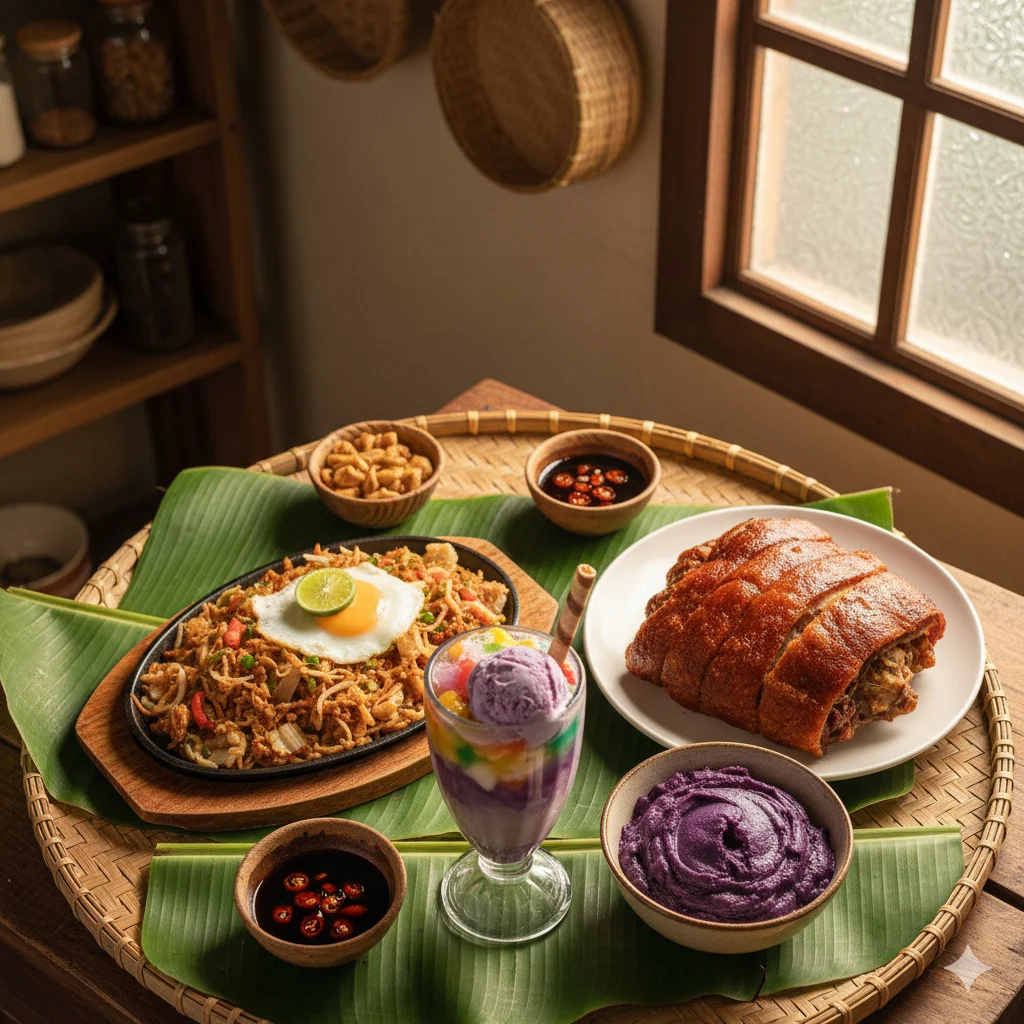
Filipino food names and pictures help readers identify traditional, street, and regional dishes from the Philippines while understanding their ingredients and cultural background.
Filipino cuisine is a vibrant fusion of Malay, Spanish, Chinese, and American influences, creating bold flavors and unique combinations you won’t find anywhere else. If you are searching for Filipino food names and pictures, you likely want to recognize popular dishes, explore traditional recipes, or visually identify meals before trying them. From savory favorites like Adobo, Sinigang, and Kare-Kare to beloved desserts such as Halo-Halo and Leche Flan, Filipino food offers something for every taste.
In this guide, you will discover a well-organized collection of Filipino food names and pictures, including:
- 🇵🇭 Traditional main dishes
- 🍢 Popular street foods
- 🍰 Classic Filipino desserts
- 🥘 Regional specialties
Each dish will include a clear name, description, and image to help you easily identify and understand it. Whether you are a student researching cuisine, a traveler planning a trip, a food blogger, or simply curious about Filipino culture, this article will give you a complete and engaging introduction to authentic Filipino food.
Classic Filipino Main Dishes (Boy Names)
These hearty, strong-flavored dishes are the “boys” of Filipino cooking—bold, dependable, and always filling.
Adobo (ah-DOH-boh)
Meaning: Spanish for “marinade.” Made with meat braised in vinegar, soy sauce, garlic, and pepper. Quality: Savory, tangy, comforting.
Best for: Anyone who loves simple, no-fuss food that tastes amazing with steamed rice.
Lechon (leh-CHON)
Meaning: Spanish for “roasted suckling pig.” Whole pig roasted over charcoal until the skin is crispy. Quality: Festive, celebratory, crunchy.
Best for: Party lovers and crispy-skin enthusiasts. The star of every Filipino fiesta!
Sisig (SEE-sig)
Meaning: From a Spanish word meaning “to sizzle.” Chopped pork face and liver seasoned with calamansi and chili, served on a hot plate. Quality: Sizzling, sour, spicy.
Best for: Beer drinkers and adventurous eaters who love bold, tangy flavors.
Kaldereta (kal-deh-REH-tah)
Meaning: Spanish influence. Goat or beef stew cooked in tomato sauce with liver spread, bell peppers, and cheese. Quality: Rich, hearty, slightly sweet.
Best for: Those who enjoy thick, saucy stews with a cheesy twist.
Menudo (meh-NOO-doh)
Meaning: Spanish for “small change.” Pork and liver stew with carrots, potatoes, and raisins in tomato sauce. Quality: Colorful, mild, family-friendly.
Best for: Kids and anyone who likes sweet-savory combinations.
Savory Soups and Stews (Girl Names)
These dishes are like the “girls” of Filipino food—nurturing, soothing, and often packed with vegetables.
Sinigang (see-NEE-gang)
Meaning: From the Tagalog word “sigang” meaning “to stew.” Sour soup made with tamarind, meat or shrimp, and vegetables. Quality: Comforting, tangy, refreshing.
Best for: Soup lovers and anyone feeling under the weather. Perfect for rainy days!
Tinola (tee-NOH-lah)
Meaning: From “tola” meaning “to cook with ginger.” Chicken soup with green papaya and chili leaves. Quality: Light, gingery, healing.
Best for: Those who prefer clear, mild soups. A classic dish for new moms.
Bulalo (boo-LAH-loh)
Meaning: Tagalog for “bone marrow.” Beef shank soup cooked slowly until tender, with corn and cabbage. Quality: Rich, beefy, melt-in-your-mouth.
Best for: Meat lovers who enjoy slurping bone marrow. Very satisfying!
Nilaga (nee-LAH-gah)
Meaning: Tagalog for “boiled.” Boiled beef or pork with potatoes, cabbage, and plantains. Quality: Simple, clean, wholesome.
Best for: Anyone wanting a homey, no-spice meal. Reminds Filipinos of mom’s cooking.
Binignit (bee-neeg-NEET)
Meaning: Visayan dialect for “mixture.” Coconut milk soup with root crops, bananas, and tapioca pearls. Quality: Sweet, creamy, chunky.
Best for: Dessert lovers who enjoy soup in a bowl. Served during Lenten season.
Noodle Dishes and Rice Meals (Unisex Names)
These are the balanced, go-to meals that everyone—young or old, male or female—loves equally.
Pancit (pan-SIT)
Meaning: Hokkien Chinese for “convenient food.” Stir-fried noodles with meat and vegetables. Quality: Versatile, light, lucky.
Best for: Birthday celebrations! Long noodles symbolize long life.
Arroz Caldo (ah-ROS KAL-doh)
Meaning: Spanish for “rice broth.” Rice porridge cooked with chicken, ginger, and garlic, topped with fried garlic and egg. Quality: Warm, soft, soothing.
Best for: Breakfast or sick days. Filipino comfort food in a bowl.
Champorado (cham-poh-RAH-doh)
Meaning: Spanish-Mexican origin. Sweet chocolate rice porridge served with dried salted fish. Quality: Sweet, creamy, surprisingly savory.
Best for: Breakfast enthusiasts who love the sweet-and-salty combo.
Bihon (BEE-hon)
Meaning: Tagalog for “rice noodles.” Thin white noodles stir-fried with soy sauce, cabbage, carrots, and meat. Quality: Light, bouncy, affordable.
Best for: Potluck parties and large families. Feeds many people on a budget.
Palabok (pah-LAH-bok)
Meaning: Tagalog for “sauce.” Rice noodles topped with orange shrimp sauce, crushed chicharon, eggs, and shrimp. Quality: Saucy, savory, festive.
Best for: Anyone who loves saucy noodles with lots of toppings.
Unique and Uncommon Filipino Foods
These dishes stand out because of unusual ingredients, cooking methods, or regional origins.
Balut (BAH-loot)
Meaning: Tagalog for “wrapped.” Fertilized duck egg with a nearly-developed embryo, boiled and eaten from the shell. Quality: Adventurous, protein-rich, surprising.
Best for: Brave eaters and travelers seeking authentic street food experiences.
Dinuguan (dee-noo-GWAN)
Meaning: From “dugo” meaning “blood.” Pork stew cooked in pig’s blood and innards, flavored with chili and vinegar. Quality: Dark, savory, slightly tangy.
Best for: Offal lovers and those wanting to taste deep, earthy Filipino flavors.
Kamaro (kah-MAH-roh)
Meaning: Tagalog for “cricket.” Field crickets sautéed in garlic, onions, tomatoes, and vinegar. Quality: Crunchy, garlicky, foreign.
Best for: Adventurous foodies who love trying insect-based delicacies.
Papaitan (pah-pah-EE-tan)
Meaning: From “pait” meaning “bitter.” Goat or beef innard stew flavored with bile for bitterness. Quality: Bitter, gamey, acquired taste.
Best for: Bold palates who enjoy bitter flavors and offal dishes.
Tamilok (tah-MEE-lok)
Meaning: Visayan term. Woodworm found in mangrove trees, eaten fresh with vinegar and chili. Quality: Chewy, briny, ocean-like.
Best for: Extreme food adventurers. Not actually a worm, but a mollusk!
Funny and Whimsical Filipino Food Names
Some Filipino dishes have names that make you smile, giggle, or scratch your head.
Karekare (KAH-reh KAH-reh)
Meaning: Repetition for emphasis. Oxtail stew in peanut sauce with vegetables and bagoong (shrimp paste). Quality: Creamy, nutty, elegant.
Best for: Peanut butter lovers. The name sounds cute, but the dish is fancy!
Ukoy (OO-koy)
Meaning: From Chinese-Filipino origin. Shrimp and vegetable fritters, crispy and golden. Quality: Crunchy, salty, addictive.
Best for: Snackers who love dipping crispy things in vinegar.
Tokwa’t Baboy (TOK-waht BAH-boy)
Meaning: “Tokwa” (tofu) + “at” (and) + “baboy” (pork). Fried tofu and boiled pork ears in soy sauce-vinegar dressing. Quality: Chewy, tangy, garlicky.
Best for: Pulutan lovers (food paired with alcoholic drinks).
Bopis (BOH-pis)
Meaning: Mexican-Spanish origin. Minced pork lungs and heart sautéed in tomatoes, onions, and chili. Quality: Spicy, finely chopped, flavorful.
Best for: Spice seekers and adventurous home cooks.
Itlog na Maalat (IT-log nah MAH-ahl-at)
Meaning: “Salty eggs.” Duck eggs preserved in salt and clay until firm, served with tomatoes. Quality: Salty, creamy, bright orange.
Best for: Breakfast lovers who enjoy strong, savory flavors.
Trendy and Modern Filipino Dishes
Chefs today put new spins on old favorites. These modern dishes keep Filipino food names and pictures fresh and exciting.
Sisig Tacos (SEE-sig TAH-kohs)
Meaning: Filipino-Mexican fusion. Crispy pork sisig stuffed into tortillas with lime crema. Quality: Crunchy, tangy, handheld.
Best for: Millennials and Gen Z foodies who love fusion street food.
Ube Cheese Pandesal (OO-beh cheez pan-DEH-sal)
Meaning: Purple yam + cheese + traditional bread roll. Soft bread rolls with purple yam filling and melted cheese. Quality: Sweet, salty, vibrant purple.
Best for: Instagrammers! The color is gorgeous and the taste is even better.
Salpicao (sal-pee-KOW)
Meaning: Spanish influence. Garlic-butter fried beef cubes served with mushroom sauce. Quality: Buttery, garlicky, tender.
Best for: Fine dining lovers who want Filipino flavors in an elegant package.
Lechon Kawali (LEH-chon kah-WAH-lee)
Meaning: “Lechon” (roast) + “kawali” (wok). Deep-fried crispy pork belly served with liver sauce or vinegar. Quality: Ultra-crunchy, fatty, indulgent.
Best for: Keto dieters and pork rind fans.
Coconut Wine Sangria (lah-TIK sahng-GREE-ah)
Meaning: Spanish-Filipino fusion. Lambanog (coconut vodka) mixed with tropical fruits. Quality: Boozy, fruity, refreshing.
Best for: Party hosts wanting a local twist on a Spanish classic.
Fantasy and Mythical-Inspired Filipino Foods
These dishes feel almost magical—whether from their origin stories or their incredible flavors.
Bibingka (bee-BEENG-kah)
Meaning: Possibly Sanskrit origin. Rice cake baked in clay pots lined with banana leaves, topped with salted egg and cheese. Quality: Soft, smoky, sweet-savory.
Best for: Early morning churchgoers. Sold outside churches during Christmas!
Puto Bumbong (POO-toh BOOM-bong)
Meaning: “Puto” (rice cake) + “bumbong” (bamboo tube). Purple rice steamed in bamboo tubes, served with butter, coconut, and sugar. Quality: Chewy, purple, aromatic.
Best for: Christmas season lovers. Only available during the holidays!
Sapin-Sapin (sah-PIN sah-PIN)
Meaning: “Layer upon layer.” Multicolored glutinous rice cake with coconut milk, each layer a different flavor. Quality: Sticky, sweet, colorful.
Best for: Kids and anyone who eats with their eyes first.
Halabos (hah-LAH-bohs)
Meaning: From “labos” meaning “to steam lightly.” Shrimp or crab steamed in their own juices with salt and soda. Quality: Sweet, pure, simple.
Best for: Seafood purists who don’t want heavy sauces.
Pinangat (pee-NAH-ngat)
Meaning: Bicol dialect. Taro leaves stuffed with fish or pork, cooked in coconut milk. Quality: Creamy, spicy, melt-in-your-mouth.
Best for: Those who dream of Bicol’s volcanic landscapes and rich coconut dishes.
Mythical and Historical Filipino Foods
These recipes have been passed down for generations, carrying stories from pre-colonial times.
Kinilaw (kee-NEE-low)
Meaning: From “kilaw” meaning “to eat fresh.” Raw fish cured in vinegar, calamansi, ginger, and chili. Quality: Fresh, sour, ceviche-like.
Best for: Raw fish enthusiasts. The original Filipino ceviche from ancient times!
Inihaw (ee-NEE-haw)
Meaning: “Grilled over charcoal.” Meat or seafood marinated and grilled until slightly charred. Quality: Smoky, juicy, simple.
Best for: Beach-goers and backyard BBQ lovers.
Daing (dah-EENG)
Meaning: “Dried fish.” Fish split open, salted, and sun-dried, then fried. Quality: Salty, crispy, pungent.
Best for: Breakfast champions who grew up eating this with garlic rice and egg.
Tapang Taal (tah-PAHNG tah-AHL)
Meaning: “Cured meat from Taal.” Beef cured in salt and spices, sun-dried, then fried. Quality: Sweet-salty, chewy, garlicky.
Best for: History buffs wanting to taste Batangas heritage.
Kilawin (kee-LAH-win)
Meaning: Northern Luzon version of kinilaw. Grilled meat or offal chopped and mixed with vinegar, ginger, and chili. Quality: Smoky, tangy, chopped fine.
Best for: Ilocano food lovers and vinegar enthusiasts.
Meaningful and Strong-Named Filipino Foods
These dishes carry deep cultural significance. Their names reflect strength, resilience, and community.
Lumpiang Sariwa (LOOM-pyung sah-REE-wah)
Meaning: “Fresh spring roll.” Unfried spring roll with vegetables and pork, wrapped in soft egg crepe with sweet peanut sauce. Quality: Fresh, light, wholesome.
Best for: Health-conscious eaters wanting vegetable-packed Filipino food.
Morcon (mor-KON)
Meaning: Spanish origin. Stuffed beef roll with hotdog, cheese, pickles, and hard-boiled egg, braised in tomato sauce. Quality: Festive, hearty, impressive.
Best for: Special occasions and family gatherings. A labor of love!
Pinakbet (pee-nak-BET)
Meaning: Ilocano dialect. Mixed vegetables stewed in shrimp paste with bitter melon, squash, okra, and eggplant. Quality: Bitter-savory, vegetable-forward, humble.
Best for: Vegetable lovers and those embracing bitter flavors.
Laing (lah-ING)
Meaning: Bicol dialect. Dried taro leaves slow-cooked in spicy coconut milk. Quality: Creamy, spicy, umami-rich.
Best for: Coconut milk substance and chili lovers.
Goto (GO-toh)
Meaning: Hokkien origin. Rice porridge with beef tripe, ginger, and garlic, topped with chicharon and egg. Quality: Comforting, gelatinous, filling.
Best for: Hangover cure seekers and breakfast porridge fans.
Sweet Desserts and Merienda (Snacks)
No Filipino meal is complete without sweets! These desserts are famous in every Filipino food names and pictures collection.
Halo-Halo (HAH-loh HAH-loh)
Meaning: “Mix-mix.” Shaved ice dessert with sweetened beans, fruits, jellies, leche flan, ube ice cream, and milk. Quality: Colorful, refreshing, chaotic.
Best for: Hot summer days and anyone who loves a dessert treasure hunt.
Leche Flan (LEH-cheh flahn)
Meaning: Spanish for “milk custard.” Rich steamed custard with caramel syrup. Quality: Silky, sweet, golden.
Best for: Custard fans. A staple at every Filipino birthday party.
Ube Halaya (OO-beh hah-LAH-yah)
Meaning: “Purple yam jam.” Mashed purple yam cooked with coconut milk and condensed milk. Quality: Creamy, sweet, vibrant purple.
Best for: Purple lovers. The most Instagrammable Filipino dessert!
Turon (too-RON)
Meaning: Possibly from “turrón” (Spanish nougat). Saba banana and jackfruit rolled in spring roll wrapper, fried, and coated with caramel. Quality: Crunchy, sweet, addictive.
Best for: Street food lovers and sweet snackers.
Biko (BEE-koh)
Meaning: From Malay-Indonesian origin. Sticky rice cooked in coconut milk and brown sugar, topped with caramelized coconut cream. Quality: Chewy, sweet, dense.
Best for: Anyone who loves rice cakes and coconut desserts.
Conclusion
Filipino food names and pictures tell a beautiful story—of families cooking together, of ancient traditions meeting Spanish influences, and of a love for bold, memorable flavors. From the tangy punch of Sinigang to the sweet chaos of Halo-Halo, each dish carries a name that means something special.
We hope this guide helps you explore Filipino food with confidence. The next time you see these names on a menu, you’ll know exactly what to expect—and maybe even impress your friends with fun pronunciation tips! Whether you are cooking at home or dining out, the world of Filipino dishes welcomes you with warmth and deliciousness.
Remember: Filipino food is best enjoyed with family and friends. So gather your loved ones, serve plenty of rice, and say “kain na!”—it’s time to eat!
Frequently Asked Questions
1. What are the most popular Filipino food names and pictures I should search for first?
Start with Adobo, Lechon, Sinigang, Halo-Halo, and Sisig. These five dishes are the most famous Filipino food names and pictures that represent the country’s flavors best.
2. Why are Filipino food names and pictures important to Filipino culture?
Filipino food names and pictures preserve culinary heritage, tell stories of family traditions, and help overseas Filipinos feel connected to home. They also introduce international food lovers to the richness of Philippine cuisine.
3. Where can I find authentic Filipino food names and pictures online?
You can explore Filipino food names and pictures on food blogs like Panlasang Pinoy, Filipino recipe websites, and Instagram hashtags such as #FilipinoFood and #Pulutan. Pinterest also has excellent visual collections.
4. How do I pronounce difficult Filipino food names and pictures correctly?
Break the word into syllables and stress the second-to-last syllable in most Tagalog words. For example, si-NI-gang, not si-ni-GANG. Listening to Filipino cooking videos helps master the pronunciation of Filipino food names and pictures.
5. Are Filipino food names and pictures available for regional dishes too?
Yes! Filipino food names and pictures include regional specialties like Bicol’s Laing, Ilocos’s Pinakbet, Pampanga’s Sisig, and Cebu’s Lechon. Each region has unique Filipino food names and pictures worth discovering.

Mary Butts was a British modernist writer known for her experimental style, myth-inspired themes, and influential novels exploring psychology and spirituality.